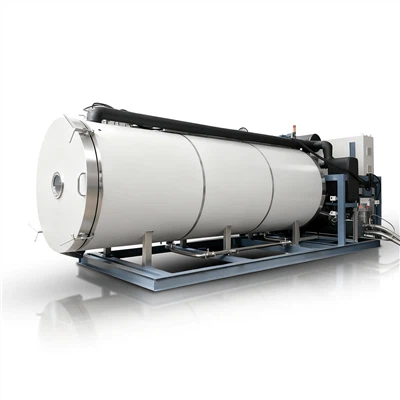
Optimizing the placement of vials in a vial production freeze dryer is crucial for achieving efficient and uniform drying. As a supplier of Vial Production Freeze Dryers, we understand the significance of this process and have gathered valuable insights to share with you. In this blog post, we will explore various strategies and considerations to help you optimize vial placement for better drying results.
Understanding the Freeze Drying Process
Before delving into vial placement optimization, it's essential to have a basic understanding of the freeze drying process. Freeze drying, also known as lyophilization, is a method of removing water from a product by freezing it and then sublimating the ice directly from the solid to the gaseous state. This process helps preserve the product's structure, quality, and stability, making it suitable for a wide range of applications, including pharmaceuticals, biotechnology, and food industries.
The freeze drying process typically consists of three main stages: freezing, primary drying, and secondary drying. During the freezing stage, the product is cooled below its freezing point to form ice crystals. In the primary drying stage, the pressure is reduced, and heat is applied to sublimate the ice directly into vapor. Finally, in the secondary drying stage, any remaining bound water is removed by further reducing the pressure and increasing the temperature.
Importance of Vial Placement
The placement of vials in the freeze dryer can significantly impact the drying efficiency and uniformity. Proper vial placement ensures that each vial receives an equal amount of heat transfer and sublimation, resulting in consistent drying across all vials. On the other hand, improper vial placement can lead to uneven drying, longer drying times, and potential product quality issues.
Here are some key factors to consider when optimizing vial placement:
- Heat Transfer: Vials should be placed in a way that allows for efficient heat transfer from the shelves to the product. This can be achieved by ensuring proper spacing between vials and avoiding overcrowding.
- Airflow: Adequate airflow is essential for removing the sublimated water vapor from the vials. Vials should be arranged to allow for unrestricted airflow around each vial, preventing the formation of stagnant air pockets.
- Vial Orientation: The orientation of the vials can also affect the drying process. Vials should be placed upright to ensure that the ice crystals form evenly and that the sublimated water vapor can escape easily.
- Shelf Loading: The loading pattern of the vials on the shelves can impact the overall drying performance. It's important to distribute the vials evenly across the shelves to ensure uniform heat transfer and airflow.
Strategies for Optimizing Vial Placement
Based on our experience and research, we have developed several strategies for optimizing vial placement in a vial production freeze dryer. These strategies can help you achieve better drying results and improve the overall efficiency of your freeze drying process.
1. Use a Vial Rack or Tray
Using a vial rack or tray can help organize the vials and ensure proper spacing between them. Vial racks or trays are available in various sizes and configurations, allowing you to choose the one that best suits your needs. Make sure to select a rack or tray that is compatible with your freeze dryer and that provides adequate support for the vials.
2. Maintain Consistent Vial Spacing
Consistent vial spacing is crucial for ensuring uniform heat transfer and airflow. The spacing between vials should be sufficient to allow for unrestricted airflow around each vial, but not too large to waste valuable shelf space. A general rule of thumb is to maintain a spacing of at least 1-2 mm between vials.


3. Arrange Vials in a Grid Pattern
Arranging vials in a grid pattern can help ensure even distribution of heat and airflow across the shelves. This can be achieved by placing the vials in rows and columns, with equal spacing between each vial. A grid pattern also makes it easier to load and unload the vials from the freeze dryer.
4. Consider Vial Size and Shape
The size and shape of the vials can also affect the drying process. Larger vials may require more time to dry compared to smaller vials, and vials with irregular shapes may experience uneven drying. When optimizing vial placement, it's important to consider the size and shape of the vials and adjust the spacing and arrangement accordingly.
5. Use a Shelf Loading Pattern
Using a shelf loading pattern can help ensure uniform heat transfer and airflow across the shelves. There are several different shelf loading patterns that you can choose from, including the serpentine pattern, the parallel pattern, and the diagonal pattern. The choice of loading pattern depends on the size and shape of the vials, as well as the design of the freeze dryer.
Case Study: Optimizing Vial Placement in a Pharmaceutical Production Freeze Dryer
To illustrate the effectiveness of optimizing vial placement, let's consider a case study of a pharmaceutical production freeze dryer. The pharmaceutical company was experiencing uneven drying and longer drying times, which were affecting the quality and efficiency of their production process.
After conducting a thorough analysis of the freeze drying process, we recommended several changes to the vial placement strategy. These changes included using a vial rack to organize the vials, maintaining consistent vial spacing, arranging the vials in a grid pattern, and using a shelf loading pattern.
The results of the changes were significant. The drying time was reduced by approximately 20%, and the drying uniformity was improved across all vials. The pharmaceutical company was able to increase their production efficiency and reduce their production costs, while also improving the quality of their products.
Conclusion
Optimizing the placement of vials in a vial production freeze dryer is essential for achieving efficient and uniform drying. By following the strategies and considerations outlined in this blog post, you can improve the drying performance of your freeze dryer and ensure the quality and stability of your products.
As a supplier of Vial Production Freeze Dryers, we are committed to providing our customers with the highest quality equipment and support. If you have any questions or need further assistance with optimizing vial placement in your freeze dryer, please don't hesitate to contact us. We would be happy to help you find the best solution for your specific needs.
References
Are you looking to enhance your freeze drying process? Contact us today to discuss how our Vial Production Freeze Dryers can meet your specific requirements and help you achieve better drying results. Our team of experts is ready to assist you in optimizing your vial placement and improving the efficiency of your production line.