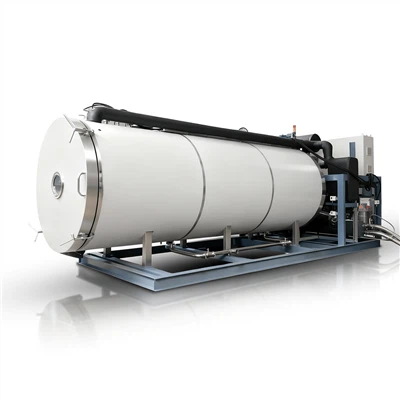
In the world of electronics manufacturing and maintenance, the need for effective drying methods is crucial. Moisture can cause a variety of issues in electronic components, from corrosion and short - circuits to reduced performance and lifespan. As a Laboratory Freeze Dryer Laboratory Freeze Dryer supplier, we often receive inquiries about the feasibility of using our freeze dryers for drying electronic components. In this blog post, we will explore this topic in depth, considering the principles of freeze drying, the characteristics of electronic components, and the potential benefits and challenges.
Understanding Freeze Drying
Freeze drying, also known as lyophilization, is a process that involves freezing a substance and then removing the ice by sublimation. Sublimation is the direct transition of a substance from the solid phase (ice) to the gaseous phase (water vapor) without passing through the liquid phase. This process occurs under low - pressure conditions, typically in a vacuum chamber.
The basic steps of freeze drying are as follows:
- Freezing: The sample is first cooled to a temperature below its freezing point. This step is crucial as it determines the structure and quality of the final dried product.
- Primary Drying: Once the sample is frozen, the pressure in the chamber is reduced, and heat is applied. This causes the ice to sublimate, and the water vapor is removed by a vacuum pump.
- Secondary Drying: After most of the ice has been removed, the temperature is slightly increased to remove any remaining bound water molecules.
Characteristics of Electronic Components
Electronic components come in a wide variety of shapes, sizes, and materials. They can be made of metals, semiconductors, ceramics, polymers, and various composites. Each material has its own physical and chemical properties, which can affect how it responds to different drying methods.
For example, metals are good conductors of heat and electricity, but they can be prone to corrosion in the presence of moisture. Semiconductors are highly sensitive to temperature and humidity changes, and even a small amount of moisture can disrupt their electrical properties. Ceramics are brittle and can crack under thermal stress, while polymers may deform or lose their mechanical properties at high temperatures.
Potential Benefits of Using a Laboratory Freeze Dryer for Electronic Components
-
Gentle Drying Process: Freeze drying is a relatively gentle process compared to other drying methods, such as oven drying or air drying. The low - temperature operation helps to prevent thermal damage to sensitive electronic components. For example, semiconductors can be damaged by high temperatures, which can cause changes in their crystal structure and electrical properties. Freeze drying at low temperatures minimizes this risk.
-
Removal of Moisture without Liquid Phase: Since freeze drying involves sublimation, there is no liquid phase during the drying process. This is important because liquid water can cause short - circuits and corrosion in electronic components. By removing moisture in the form of vapor, freeze drying helps to protect the integrity of the components.


-
Uniform Drying: Freeze drying can provide uniform drying throughout the component. The vacuum environment ensures that the water vapor is removed evenly from all parts of the sample, reducing the risk of uneven drying and potential damage. This is particularly important for complex electronic assemblies where different parts may have different moisture contents.
-
Preservation of Component Structure: The freeze - drying process can help to preserve the structure of electronic components. The ice crystals formed during freezing act as a template, and when they sublimate, the original structure of the component is largely maintained. This is beneficial for components with delicate or complex structures, such as microchips and printed circuit boards.
Challenges and Considerations
- Material Compatibility: Not all electronic component materials are compatible with freeze drying. Some materials may be affected by the low - temperature and low - pressure conditions. For example, certain polymers may become brittle at low temperatures, and some adhesives may lose their bonding strength. It is important to test the compatibility of the component materials before using a freeze dryer.
- Contamination Risk: The vacuum chamber of a freeze dryer needs to be clean to prevent contamination of the electronic components. Any particles or residues in the chamber can adhere to the components and cause malfunctions. Regular cleaning and maintenance of the freeze dryer are essential to minimize this risk.
- Cost and Time: Freeze drying can be a relatively expensive and time - consuming process compared to other drying methods. The equipment itself is costly, and the process requires a significant amount of energy to maintain the low - temperature and low - pressure conditions. Additionally, the drying time can be longer, especially for larger or more complex components.
- Size and Shape Limitations: The size and shape of the electronic components may be limited by the capacity of the freeze dryer. Some large - scale electronic assemblies may not fit into the chamber of a standard Lab - scale Freeze Dryer. It is important to choose a freeze dryer with an appropriate chamber size and configuration for the components to be dried.
Case Studies
Let's look at a few case studies to illustrate the practical application of freeze drying for electronic components.
Case Study 1: Drying of Microchips
A semiconductor manufacturing company was experiencing issues with moisture - related failures in their microchips. They decided to try using a Stoppering Multi - Manifold Bell - Type Freeze Dryer to dry the microchips before packaging. The freeze - drying process was able to remove the moisture effectively without causing any damage to the delicate semiconductor structures. As a result, the failure rate of the microchips decreased significantly, and the overall quality of the products improved.
Case Study 2: Drying of Printed Circuit Boards (PCBs)
A PCB manufacturer was facing problems with corrosion on the copper traces of their boards due to moisture absorption during storage. They experimented with freeze drying as a solution. After freeze drying, the PCBs showed a significant reduction in corrosion, and their electrical performance was restored. The manufacturer was able to extend the shelf life of their PCBs and reduce the number of rejected products.
Conclusion
In conclusion, a laboratory freeze dryer can be a viable option for drying electronic components in certain situations. The gentle drying process, removal of moisture without a liquid phase, uniform drying, and preservation of component structure offer several advantages. However, there are also challenges and considerations, such as material compatibility, contamination risk, cost, and size limitations.
Before deciding to use a freeze dryer for electronic components, it is important to conduct thorough testing to ensure the compatibility of the components with the freeze - drying process. As a Laboratory Freeze Dryer supplier, we are committed to providing our customers with the best solutions for their specific needs. If you are interested in exploring the use of our freeze dryers for drying electronic components, we encourage you to contact us for a detailed consultation. Our team of experts can help you determine the most suitable freeze - drying equipment and process for your applications. Let's work together to improve the quality and reliability of your electronic products.
References
- Wang, X., & Zhang, Y. (2018). Lyophilization technology and its application in the pharmaceutical industry. Journal of Pharmaceutical Sciences, 107(1), 2 - 12.
- Smith, J. R., & Johnson, L. M. (2019). Moisture management in electronic devices. IEEE Transactions on Components, Packaging and Manufacturing Technology, 9(10), 1677 - 1684.
- Chen, Y., & Li, H. (2020). Influence of freeze - drying on the properties of polymer - based materials. Polymer Testing, 86, 106572.