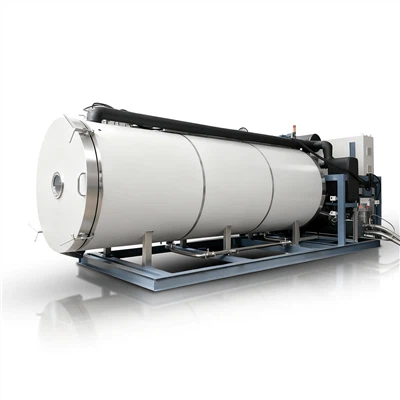
In the realm of vial production, freeze dryers play a pivotal role in preserving the integrity and quality of various products. One of the most critical aspects of operating a vial production freeze dryer is the drying speed. A faster drying process not only enhances productivity but also reduces costs and improves the overall efficiency of the production line. As a leading supplier of Vial Production Freeze Dryers, we understand the challenges faced by our customers in optimizing drying speed. In this blog post, we will explore several strategies to improve the drying speed in a vial production freeze dryer.


Understanding the Freeze Drying Process
Before delving into the strategies to improve drying speed, it is essential to understand the freeze drying process. Freeze drying, also known as lyophilization, is a process that involves freezing the product and then removing the frozen water through sublimation. The process consists of three main stages: freezing, primary drying, and secondary drying.
During the freezing stage, the product is cooled below its freezing point to form ice crystals. The rate of freezing can significantly impact the size and distribution of ice crystals, which in turn affects the drying speed. A slower freezing rate generally results in larger ice crystals, which can facilitate faster sublimation during the primary drying stage.
The primary drying stage is the most time - consuming phase of the freeze drying process. In this stage, the pressure is reduced, and heat is applied to the product to initiate sublimation, where the ice directly converts from a solid to a vapor without passing through the liquid phase. The secondary drying stage involves removing the remaining bound water from the product by further reducing the pressure and increasing the temperature.
Optimizing the Freezing Process
- Controlled Freezing Rate: As mentioned earlier, the freezing rate has a direct impact on the size of ice crystals. To improve the drying speed, it is advisable to use a controlled freezing rate. A slower freezing rate allows for the formation of larger ice crystals, which create more porous structures in the product. These porous structures provide more pathways for water vapor to escape during sublimation, thereby increasing the drying speed. Our Batch Freeze Drying Machine is equipped with advanced temperature control systems that enable precise control of the freezing rate.
- Uniform Freezing: Ensuring uniform freezing across all vials is crucial for consistent drying speed. Non - uniform freezing can lead to variations in ice crystal size and distribution, resulting in uneven drying. Our freeze dryers are designed with innovative shelving systems and air circulation mechanisms to promote uniform heat transfer during the freezing process, ensuring that all vials are frozen at the same rate.
Enhancing Heat Transfer
- Efficient Shelf Design: The shelves in a freeze dryer play a vital role in transferring heat to the product. A well - designed shelf can improve heat transfer efficiency, thereby increasing the drying speed. Our Silicone Oil Freeze Dryer for Batch Production features high - conductivity shelves that are specifically engineered to maximize heat transfer. The use of silicone oil as a heat transfer medium ensures uniform temperature distribution across the shelves, allowing for faster and more consistent drying.
- Optimized Heat Input: During the primary drying stage, it is important to provide the right amount of heat to the product. Too little heat can slow down the sublimation process, while too much heat can cause the product to melt or degrade. Our freeze dryers are equipped with intelligent heat control systems that continuously monitor and adjust the heat input based on the product's temperature and the pressure inside the chamber. This ensures that the sublimation process proceeds at an optimal rate, improving the drying speed.
Improving Vacuum System Performance
- High - Capacity Vacuum Pumps: A high - performance vacuum system is essential for maintaining low pressures during the freeze drying process. Low pressures are necessary to facilitate sublimation. Our freeze dryers are equipped with high - capacity vacuum pumps that can quickly reduce the pressure inside the chamber to the desired level. These pumps also have excellent pumping speeds, which helps to remove the water vapor generated during sublimation more efficiently, thereby increasing the drying speed.
- Leak Detection and Sealing: Any leaks in the freeze dryer chamber can compromise the vacuum system's performance and slow down the drying process. Regular leak detection and maintenance are crucial to ensure that the chamber is properly sealed. Our freeze dryers are designed with high - quality seals and gaskets, and we provide comprehensive training and support to our customers on leak detection and maintenance procedures.
Optimizing the Batch Freeze Drying Process
- Batch Size and Loading Pattern: The size of the batch and the way the vials are loaded into the freeze dryer can also affect the drying speed. Overloading the freeze dryer can restrict air circulation and heat transfer, leading to slower drying. Our Batch Freeze Drying Process guidelines provide recommendations on the optimal batch size and loading patterns for different types of products. By following these guidelines, customers can ensure that the freeze dryer operates at maximum efficiency, improving the drying speed.
- Process Monitoring and Control: Implementing a comprehensive process monitoring and control system is essential for optimizing the batch freeze drying process. Our freeze dryers are equipped with advanced sensors and control software that allow for real - time monitoring of key parameters such as temperature, pressure, and moisture content. This enables operators to make timely adjustments to the process, ensuring that the drying speed is maximized while maintaining product quality.
Conclusion
Improving the drying speed in a vial production freeze dryer is a multi - faceted challenge that requires a comprehensive approach. By optimizing the freezing process, enhancing heat transfer, improving vacuum system performance, and optimizing the batch freeze drying process, significant improvements in drying speed can be achieved. As a leading supplier of Vial Production Freeze Dryers, we are committed to providing our customers with the latest technology and solutions to help them improve their production efficiency.
If you are interested in learning more about our Vial Production Freeze Dryers or would like to discuss your specific requirements, we encourage you to contact us for a procurement consultation. Our team of experts is ready to assist you in finding the best freeze dryer solution for your needs.
References
- Pikal, M. J., & Shah, S. (1990). The lyophilization of pharmaceuticals: II. Annealing of frozen solutions. Journal of Parenteral Science & Technology, 44(4), 188 - 195.
- Wang, L. (2000). Lyophilization and development of solid protein pharmaceuticals. International Journal of Pharmaceutics, 203(1 - 2), 1 - 60.
- Tang, X., & Pikal, M. J. (2004). Design of freeze - drying processes for pharmaceuticals: Practical advice. Pharmaceutical Research, 21(2), 191 - 200.