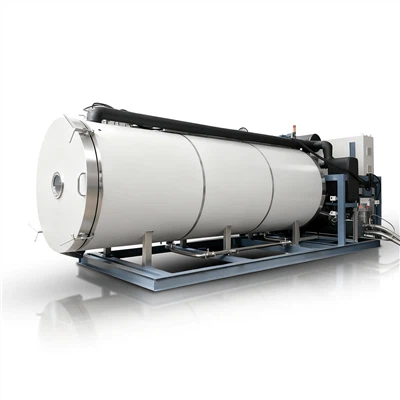
When it comes to the operation of a heated silicone oil freeze dryer, understanding the vacuum level requirement is crucial. As a seasoned supplier of Heated Silicone Oil Freeze Dryers, I've witnessed firsthand the impact of proper vacuum levels on the efficiency and quality of the freeze - drying process. In this blog, I'll delve into the intricacies of vacuum level requirements for these specialized machines.
The Basics of Freeze Drying and Vacuum
Freeze drying, also known as lyophilization, is a process that involves freezing the product and then reducing the surrounding pressure to allow the frozen water in the product to sublimate directly from the solid phase to the vapor phase. This process is highly effective in preserving the structure, flavor, and nutritional value of the product.
The role of vacuum in freeze drying is two - fold. Firstly, it lowers the boiling point of water, enabling sublimation to occur at lower temperatures. This is essential because many products, especially biological and pharmaceutical ones, are sensitive to high temperatures. Secondly, the vacuum helps to remove the water vapor from the drying chamber, maintaining a low - humidity environment that promotes continuous sublimation.
Why Silicone Oil in Freeze Dryers?
Silicone oil is used in heated freeze dryers for its excellent thermal properties. It has a high boiling point, which allows it to transfer heat efficiently to the product being dried. This consistent heat transfer is vital for uniform sublimation throughout the product. Additionally, silicone oil is chemically stable, non - toxic, and has a long service life, making it an ideal choice for the heating system of a freeze dryer.


Vacuum Level Requirements for Heated Silicone Oil Freeze Dryers
The vacuum level required for a heated silicone oil freeze dryer depends on several factors, including the type of product being dried, the initial moisture content, and the desired final moisture level.
Product Type
Different products have different sublimation characteristics. For example, biological products such as vaccines and enzymes are very sensitive to temperature and require a very low vacuum level to ensure sublimation occurs at a temperature that won't damage their structure. On the other hand, food products like fruits and vegetables can tolerate slightly higher temperatures and may not require as extreme a vacuum level.
Initial Moisture Content
Products with a high initial moisture content need a more aggressive vacuum to remove the large amount of water. A lower vacuum level creates a greater pressure differential between the inside of the product and the drying chamber, facilitating faster water vapor removal. For instance, a product with an initial moisture content of 80% will require a lower vacuum level compared to a product with only 20% moisture.
Desired Final Moisture Level
If a very low final moisture level is required, such as in the case of long - term storage of pharmaceutical products, a lower vacuum level is necessary. This is because as the drying process progresses, it becomes more difficult to remove the remaining water molecules. A lower vacuum helps to overcome the resistance and drive the sublimation process to achieve the desired moisture content.
Typical Vacuum Ranges
In general, for most heated silicone oil freeze dryers, the vacuum level during the primary drying stage (when the majority of the water is removed) ranges from 0.1 to 10 Pa. This low - pressure environment ensures that sublimation occurs efficiently. During the secondary drying stage, when the remaining bound water is removed, the vacuum level may be further reduced to as low as 0.01 Pa to achieve a very low final moisture content.
Impact of Incorrect Vacuum Levels
If the vacuum level is too high (pressure is too low), it can lead to rapid sublimation, which may cause the product to crack or form a hard crust on the surface. This crust can impede the further removal of water vapor, resulting in uneven drying and a longer drying time.
Conversely, if the vacuum level is too low (pressure is too high), sublimation may not occur at an optimal rate. The product may not dry properly, and there is a risk of microbial growth due to the presence of residual moisture.
Our Product Offerings
As a supplier of Heated Silicone Oil Freeze Dryers, we offer a range of models to meet different customer needs. Our Silicone Oil Vacuum Dryer with Heat is designed for general - purpose freeze drying applications. It provides a reliable and efficient heating system using silicone oil and can achieve the necessary vacuum levels for a variety of products.
For more standard applications, our Standard Silicone Oil Heating In - Situ Freeze Dryer offers a cost - effective solution. It has a user - friendly interface and precise temperature and vacuum control systems.
If you need a freeze dryer for products that require stoppering during the drying process, our Stoppering Silicone Oil Heating In - Situ Freeze Dryer is the ideal choice. It combines the benefits of silicone oil heating with a reliable stoppering mechanism.
Ensuring Optimal Vacuum Levels
To ensure that the vacuum level in our freeze dryers is maintained at the optimal range, we use high - quality vacuum pumps and advanced vacuum control systems. These pumps are designed to provide a stable and consistent vacuum, and the control systems can adjust the vacuum level in real - time based on the drying process requirements.
Regular maintenance of the vacuum system is also essential. This includes checking for leaks, replacing worn - out seals, and cleaning the vacuum pump to ensure its efficient operation.
Conclusion
In conclusion, the vacuum level requirement for a heated silicone oil freeze dryer is a critical factor that determines the success of the freeze - drying process. By understanding the factors that influence the vacuum level and choosing the right equipment, you can achieve high - quality drying results for your products.
If you are in the market for a heated silicone oil freeze dryer or have any questions about vacuum levels and the freeze - drying process, we are here to help. Contact us to discuss your specific needs and explore how our products can meet your requirements.
References
- "Lyophilization: Introduction and Basic Principles" by John W. Carpenter and Michael J. Pikal.
- "Handbook of Industrial Drying" by Arun S. Mujumdar.
- "Thermal Properties of Silicone Oils and Their Applications in Heat Transfer" by R. K. Shah.