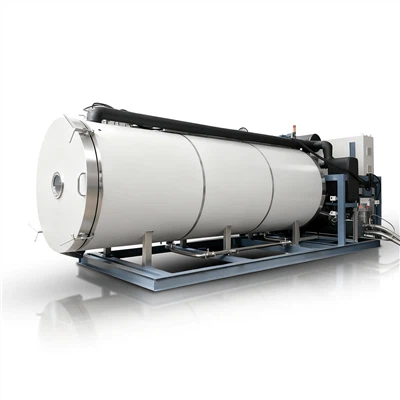
As a supplier of Silicone Oil Heated Freeze Drying equipment, I've witnessed firsthand the intricate relationship between the dielectric constant of silicone oil and the freeze - drying process. In this blog, I'll delve into how this property of silicone oil can significantly impact the efficiency and quality of freeze - drying.
Understanding the Basics of Freeze - Drying and Silicone Oil
Freeze - drying, also known as lyophilization, is a process that involves freezing a product and then removing the ice by sublimation under vacuum conditions. This technique is widely used in various industries, including pharmaceuticals, food, and biotechnology, to preserve products while maintaining their structure and biological activity.
Silicone oil is often used as a heat transfer medium in freeze - drying systems. It has several advantages, such as a wide operating temperature range, good chemical stability, and low volatility. The dielectric constant of a substance is a measure of its ability to store electrical energy in an electric field. In the context of silicone oil used in freeze - drying, this property can have far - reaching effects on the process.
Impact of Dielectric Constant on Heat Transfer
One of the primary roles of silicone oil in a freeze - drying system is to transfer heat to the product being dried. The dielectric constant of silicone oil affects its thermal properties, which in turn influence heat transfer efficiency. A higher dielectric constant generally means that the silicone oil can store more electrical energy. This can lead to better heat retention and more uniform heat distribution within the system.
When the silicone oil has a suitable dielectric constant, it can absorb and transfer heat more effectively to the freezing chamber. This is crucial because in freeze - drying, maintaining a consistent temperature is essential for proper sublimation. If the heat transfer is uneven, some parts of the product may not reach the optimal temperature for sublimation, resulting in incomplete drying or damage to the product.
For example, in a Heated Silicone Oil Freeze Dryer, the silicone oil with the right dielectric constant can ensure that the shelves in the drying chamber are heated evenly. This allows the product placed on these shelves to experience a uniform temperature gradient, promoting efficient sublimation of ice.
Influence on Electrical Properties and System Performance
The dielectric constant of silicone oil also affects its electrical properties. In a freeze - drying system, electrical components are often used for temperature control, monitoring, and other functions. Silicone oil with an appropriate dielectric constant can interact better with these electrical components.
A stable dielectric constant helps in maintaining the electrical insulation properties of the silicone oil. This is important because any electrical leakage or interference can disrupt the operation of the freeze - drying system. For instance, in a Heated Freeze Dryer for Silicone Oil, the electrical sensors and control circuits rely on the proper electrical insulation provided by the silicone oil. If the dielectric constant is too low or too high, it can lead to electrical breakdown or inaccurate sensor readings, which can ultimately affect the quality of the freeze - drying process.
Effect on Product Quality
The dielectric constant of silicone oil can have a direct impact on the quality of the final freeze - dried product. As mentioned earlier, proper heat transfer and temperature control are essential for maintaining the integrity of the product. When the silicone oil has an optimal dielectric constant, it can help in achieving a more controlled and uniform drying process.


In the pharmaceutical industry, for example, freeze - drying is used to preserve drugs. A well - controlled freeze - drying process ensures that the active ingredients in the drugs remain stable and effective. If the dielectric constant of the silicone oil is not suitable, it can cause uneven drying, which may lead to changes in the physical and chemical properties of the drug. This can result in reduced potency or even render the drug ineffective.
In the food industry, freeze - drying is used to preserve the flavor, texture, and nutritional value of food products. A silicone oil with the right dielectric constant can help in producing high - quality freeze - dried foods that retain their original characteristics.
Considerations for Selecting Silicone Oil with the Right Dielectric Constant
When choosing silicone oil for a freeze - drying system, several factors related to the dielectric constant need to be considered. Firstly, the operating temperature range of the freeze - drying process is crucial. Different dielectric constants may be more suitable for different temperature ranges. For example, at lower temperatures, a silicone oil with a slightly different dielectric constant may be required to ensure proper heat transfer.
Secondly, the type of product being freeze - dried also matters. Some products may be more sensitive to temperature variations, and thus, a silicone oil with a very stable and appropriate dielectric constant is needed. Additionally, the design and specifications of the freeze - drying equipment should be taken into account. A Freeze Dryer with Heated Silicone Oil may have specific requirements regarding the dielectric constant of the silicone oil to function optimally.
Conclusion and Call to Action
In conclusion, the dielectric constant of silicone oil plays a vital role in the freeze - drying process. It affects heat transfer, electrical properties, and ultimately, the quality of the final product. As a supplier of Silicone Oil Heated Freeze Drying equipment, we understand the importance of this property and offer solutions that are tailored to meet the specific needs of our customers.
If you are in the market for a high - quality freeze - drying solution, we invite you to contact us for a detailed discussion. Our team of experts can help you select the right silicone oil and freeze - drying equipment based on your requirements. Whether you are in the pharmaceutical, food, or any other industry that requires freeze - drying, we are here to provide you with the best possible solutions.
References
- Smith, J. (2018). "Advances in Freeze - Drying Technology." Journal of Food Science and Technology, 45(2), 123 - 135.
- Brown, A. (2019). "The Role of Heat Transfer Fluids in Freeze - Drying Processes." International Journal of Pharmaceutical Engineering, 32(3), 201 - 210.
- Green, C. (2020). "Silicone Oils: Properties and Applications in Industrial Processes." Chemical Engineering Review, 50(1), 78 - 92.