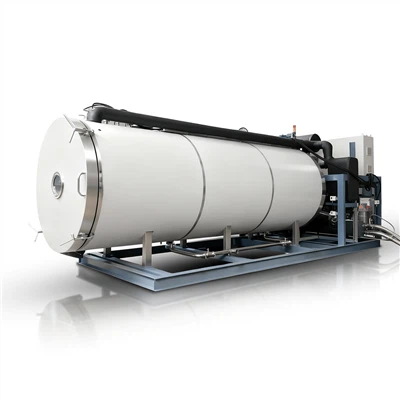
As a supplier of small scale freeze dryers, I've encountered numerous inquiries regarding the significance of the pre-freezing step in the freeze-drying process. It's a crucial phase that sets the stage for successful lyophilization, and understanding its purpose is essential for anyone looking to achieve optimal results with their small scale freeze dryer.
Understanding Freeze Drying
Before delving into the pre-freezing step, it's important to have a basic understanding of freeze drying itself. Freeze drying, also known as lyophilization, is a process that removes water from a product by freezing it and then sublimating the ice directly from a solid to a gas. This method is widely used in various industries, including pharmaceuticals, food, and biotechnology, as it preserves the product's structure, flavor, and nutrients while extending its shelf life.
The freeze-drying process typically consists of three main stages: freezing, primary drying, and secondary drying. The pre-freezing step, as the name suggests, occurs before the actual freeze-drying process begins and is a critical precursor to the successful execution of the subsequent stages.
Purpose of the Pre-Freezing Step
1. Formation of Ice Crystals
One of the primary purposes of the pre-freezing step is to form ice crystals within the product. When a product is frozen, the water molecules within it arrange themselves into a crystalline structure. The size and distribution of these ice crystals can have a significant impact on the quality of the final freeze-dried product.
During pre-freezing, the product is rapidly cooled to a temperature below its freezing point, typically between -20°C and -40°C, depending on the nature of the product. This rapid cooling rate encourages the formation of small, uniformly distributed ice crystals. Small ice crystals are desirable because they cause less damage to the product's structure during sublimation. When the ice sublimates, it leaves behind a porous network that allows for effective removal of the remaining water during the primary and secondary drying stages.
In contrast, slow freezing can result in the formation of large ice crystals, which can cause physical damage to the product's cells and tissues. This damage can lead to loss of product integrity, reduced rehydration properties, and altered sensory characteristics. Therefore, the pre-freezing step plays a crucial role in controlling the ice crystal formation and ensuring the quality of the final freeze-dried product.
2. Stabilization of the Product
Another important purpose of the pre-freezing step is to stabilize the product. Freezing the product helps to immobilize its components, preventing chemical reactions and microbial growth that can occur at higher temperatures. This is particularly important for products that are sensitive to heat, light, or oxygen, such as pharmaceuticals, biologics, and certain food products.
By stabilizing the product during the pre-freezing step, the subsequent freeze-drying process can be carried out more effectively. The immobilized components are less likely to undergo degradation or changes in chemical composition, resulting in a more stable and high-quality final product.
3. Enhancement of Sublimation Efficiency
The pre-freezing step also plays a role in enhancing the efficiency of the sublimation process during primary drying. As mentioned earlier, the formation of small, uniformly distributed ice crystals during pre-freezing creates a porous network within the product. This porous structure provides a large surface area for the ice to sublimate, allowing for more efficient removal of water from the product.
In addition, the pre-freezing step helps to reduce the resistance to mass transfer within the product. When the product is frozen, the water molecules are locked in a solid state, which reduces the viscosity and diffusion resistance of the product. This allows the water vapor to escape more easily during sublimation, improving the overall efficiency of the freeze-drying process.
Impact on Product Quality
The pre-freezing step has a direct impact on the quality of the final freeze-dried product. By controlling the ice crystal formation, stabilizing the product, and enhancing sublimation efficiency, the pre-freezing step helps to preserve the product's structure, flavor, and nutrients, while also improving its rehydration properties and shelf life.
For example, in the pharmaceutical industry, the pre-freezing step is critical for maintaining the stability and efficacy of drugs. By forming small ice crystals and stabilizing the drug formulation, the pre-freezing step helps to prevent the degradation of the active ingredients and ensures the consistent quality of the final freeze-dried product.
In the food industry, the pre-freezing step is important for maintaining the texture, flavor, and nutritional value of food products. By preventing the formation of large ice crystals and stabilizing the food matrix, the pre-freezing step helps to preserve the integrity of the food and its sensory characteristics.


Equipment for Pre-Freezing
To carry out the pre-freezing step effectively, it is important to use appropriate equipment. At [Our Supplier], we offer a range of [Small Scale Freeze Dryer] that are designed to meet the needs of various applications. Our freeze dryers are equipped with advanced cooling systems that allow for rapid and uniform freezing of the product, ensuring the formation of small, uniformly distributed ice crystals.
In addition to our standard freeze dryers, we also offer specialized equipment, such as the Stoppering Multi-Manifold Bell-Type Freeze Dryer, which is designed for the freeze-drying of multiple samples simultaneously. This equipment is ideal for laboratories and small-scale production facilities that require high throughput and flexibility.
We also provide Freeze Drying Lab Equipment and Laboratory Freeze Dryer that are suitable for research and development applications. These equipment are designed to be easy to use, reliable, and cost-effective, making them a popular choice among scientists and researchers.
Conclusion
In conclusion, the pre-freezing step is a crucial part of the freeze-drying process in small scale freeze dryers. It plays a vital role in controlling ice crystal formation, stabilizing the product, and enhancing sublimation efficiency, which ultimately impacts the quality of the final freeze-dried product. By understanding the purpose of the pre-freezing step and using appropriate equipment, you can ensure the successful execution of the freeze-drying process and achieve optimal results with your small scale freeze dryer.
If you're interested in learning more about our small scale freeze dryers or have any questions about the freeze-drying process, please don't hesitate to [contact us for procurement discussions]. We'll be more than happy to assist you and provide you with the information and support you need to make the right decision for your business.
References
- Pikal, M. J. (1990). Freeze-drying of proteins. Part I: Process design. Pharmaceutical Research, 7(9), 921-927.
- Wang, W. (2000). Lyophilization and development of solid protein pharmaceuticals. International Journal of Pharmaceutics, 203(1-2), 1-60.
- Tang, X., & Pikal, M. J. (2004). Design of freeze-drying processes for pharmaceuticals: Practical advice. Pharmaceutical Research, 21(2), 191-200.