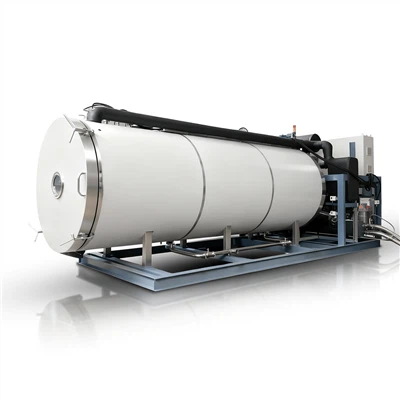
What is the drying temperature range of a food - type freeze dryer?
As a supplier of food - type freeze dryers, I am often asked about the drying temperature range of these essential machines. Understanding this range is crucial for ensuring the quality, safety, and longevity of freeze - dried food products. In this blog, I will delve into the details of the drying temperature range for food - type freeze dryers, its significance, and how it impacts the final product.
The Basics of Freeze Drying
Freeze drying, also known as lyophilization, is a process that involves freezing a product, then reducing the surrounding pressure to allow the frozen water in the product to sublimate directly from the solid phase to the gas phase. This method is highly effective for preserving food because it minimizes damage to the food's structure, flavor, and nutritional value.
The freeze - drying process generally consists of three main stages: freezing, primary drying (sublimation), and secondary drying (desorption). Each stage has specific temperature requirements that contribute to the overall success of the process.
Freezing Stage Temperature
The freezing stage is the first step in the freeze - drying process. During this stage, the food is rapidly cooled to a very low temperature, typically between - 40°C and - 80°C. The exact temperature depends on the type of food being processed. For example, foods with high water content may require a lower freezing temperature to ensure that all the water is completely frozen.
Rapid freezing is essential because it forms small ice crystals within the food. Small ice crystals minimize damage to the food's cellular structure, which helps to preserve its texture and flavor during the subsequent drying stages. For instance, if the freezing is too slow, large ice crystals can form, which may rupture the cell walls of the food, leading to a loss of nutrients and a change in texture.
Primary Drying (Sublimation) Temperature
After the food is frozen, the primary drying stage begins. This is the stage where the majority of the frozen water is removed through sublimation. The temperature during primary drying is carefully controlled to ensure efficient sublimation while maintaining the integrity of the food.
The temperature range for primary drying in a food - type freeze dryer is typically between - 20°C and - 50°C. The vacuum pressure in the drying chamber is also reduced to a very low level, usually below 0.1 mmHg. This low pressure and temperature combination allows the frozen water to sublimate directly from ice to vapor without passing through the liquid phase.
The specific temperature within this range depends on several factors, including the type of food, the size and thickness of the food pieces, and the structure of the freeze - drying equipment. For example, more delicate foods may require a lower temperature to prevent damage, while denser foods may be able to withstand a slightly higher temperature during primary drying.
Secondary Drying (Desorption) Temperature
Once the majority of the frozen water has been removed during primary drying, the secondary drying stage begins. The purpose of secondary drying is to remove any remaining bound water in the food. Bound water is water that is chemically or physically bound to the food molecules.
The temperature range for secondary drying is typically higher than that of primary drying, usually between 10°C and 40°C. At this stage, the pressure in the drying chamber is gradually increased, and the temperature is raised to break the bonds between the water molecules and the food components, allowing the water to evaporate.
The duration and temperature of secondary drying depend on the type of food and the desired moisture content. For example, if the food is intended for long - term storage, a lower final moisture content may be required, which may necessitate a longer and more aggressive secondary drying process.
Significance of the Drying Temperature Range
The drying temperature range in a food - type freeze dryer is of utmost importance for several reasons. Firstly, it directly affects the quality of the freeze - dried food. A proper temperature range ensures that the food retains its original flavor, color, texture, and nutritional value. For example, if the temperature during primary drying is too high, the food may undergo thermal degradation, leading to a loss of flavor and nutrients.
Secondly, the temperature range impacts the efficiency of the freeze - drying process. An appropriate temperature allows for optimal sublimation and desorption rates, reducing the overall drying time and energy consumption. This is not only beneficial for the environment but also for the cost - effectiveness of the production process.
Finally, the drying temperature range is crucial for ensuring the safety of the freeze - dried food. By removing water from the food, the growth of bacteria, mold, and yeast is inhibited, which extends the shelf life of the product. However, if the temperature is not properly controlled, there may be a risk of microbial contamination.
Impact of Equipment on the Drying Temperature Range
The design and quality of the food - type freeze dryer also play a significant role in determining the achievable drying temperature range. High - quality freeze dryers are equipped with advanced temperature control systems that can precisely regulate the temperature throughout the freeze - drying process.
For example, some Food Preservation Freeze Dryer models are designed with high - precision thermocouples and heating elements that can maintain a stable temperature within a narrow range. These features are essential for ensuring consistent and high - quality results.
Similarly, Freeze Dryer for Food units with efficient insulation and vacuum systems can better maintain the low temperatures required for sublimation and desorption. This not only improves the performance of the freeze - drying process but also reduces the energy consumption of the equipment.
Different Types of Food and Their Ideal Temperature Ranges
Different types of food have different ideal temperature ranges for freeze - drying. For example, fruits and vegetables generally have a high water content and are more delicate. They may require a lower temperature range during primary drying, typically between - 30°C and - 50°C, to preserve their texture and nutritional value.
Meats and seafood, on the other hand, are denser and may be able to withstand a slightly higher temperature during primary drying, usually between - 20°C and - 40°C. However, the secondary drying stage for meats and seafood should be carefully controlled to ensure that the final moisture content is low enough to prevent spoilage.
Dairy products, such as milk and cheese, also have specific temperature requirements. These products often require a precise temperature range during both primary and secondary drying to maintain their flavor and prevent the formation of unwanted compounds.
Radiation - type Food Freeze Dryer and Temperature Control
Radiation - type food freeze dryers use infrared radiation to provide heat during the drying process. This type of dryer offers several advantages, including more uniform heating and faster drying times.
In a radiation - type food freeze dryer, the temperature control is crucial. The radiation source can be adjusted to provide the appropriate amount of energy to the food, which helps to maintain the desired temperature range. For example, during primary drying, the infrared radiation can be adjusted to provide just enough energy to promote sublimation without overheating the food.
Contact Us for Your Freeze - Drying Needs
If you are in the food industry and are looking for a reliable food - type freeze dryer, we are here to help. Our company offers a wide range of high - quality freeze dryers that are designed to meet the specific needs of different food products. Whether you need a Food Preservation Freeze Dryer, a Freeze Dryer for Food, or a Radiation - type Food Freeze Dryer, we have the right solution for you.
Contact us today to discuss your requirements and learn more about how our freeze dryers can help you produce high - quality, long - lasting freeze - dried food products. Our team of experts is ready to provide you with detailed information and support throughout the purchasing process.


References
- "Freeze Drying of Foods: Principles and Practice" by George S. Skjöldebrand
- "Lyophilization: Introduction and Basic Principles" by L. Rey and J. C. May
- "Food Preservation Technology" by M. S. Rahman