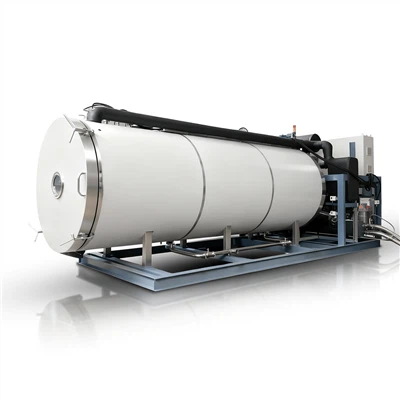
Hey there! I'm a supplier in the batch freeze drying process, and today I wanna talk about how to monitor this process in real - time.
Batch freeze drying is a common method used in various industries, like pharmaceuticals, food, and biotechnology. It's crucial to keep tabs on the process to ensure high - quality products and efficient operations. So, let's dive into some key aspects of real - time monitoring.
Temperature Monitoring
Temperature plays a huge role in the batch freeze drying process. We know that different stages, such as freezing, primary drying, and secondary drying, require specific temperature conditions. To monitor temperature in real - time, we usually use thermal sensors.
These sensors can be placed at different points inside the freeze dryer, like on the shelves where the products are placed, or near the heating or cooling elements. By constantly collecting temperature data, we can make sure that the temperature stays within the desired range. For example, during the freezing stage, we need to rapidly lower the temperature to freeze the product uniformly. If the temperature drops too slowly, it can lead to uneven ice crystal formation, which may affect the final product quality.
Some of the advanced freeze dryers we supply, like the Silicone Oil Freeze Dryer for Batch Production, are equipped with high - precision temperature sensors. These sensors can transmit data to a control system in real - time, allowing operators to adjust the temperature settings if needed.
Pressure Monitoring
Pressure is another important parameter to monitor. In batch freeze drying, the drying process mainly occurs under low - pressure conditions. When the pressure is too high, it can slow down the sublimation process, which is the key step in removing the frozen water from the product.
We use pressure gauges to measure the pressure inside the freeze dryer. These gauges can provide continuous pressure readings, which are then sent to the control system. If the pressure goes above the set limit, the control system can take actions such as adjusting the vacuum pump speed to bring the pressure back to the desired level.
Our Vial Production Freeze Dryer is specifically designed to maintain stable pressure during the entire freeze - drying process. With real - time pressure monitoring, we can ensure that the products in vials are dried properly without any quality issues.
Moisture Content Monitoring
Determining the moisture content of the product during the freeze - drying process is essential. Residual moisture can affect the shelf - life and stability of the final product. There are several ways to monitor moisture content in real - time.
One common method is using capacitance sensors. These sensors can detect the change in capacitance caused by the presence of moisture. By measuring the capacitance continuously, we can estimate the moisture content of the product. Another approach is using near - infrared (NIR) spectroscopy. NIR can analyze the chemical composition of the product and provide information about the moisture content.
In our Raw Material Liquid Production Freeze Dryer, we have integrated advanced moisture monitoring systems. This helps us to precisely control the drying process and achieve the desired moisture level in the final product.
Product Thickness and Uniformity
The thickness and uniformity of the product being freeze - dried also matter. Uneven product thickness can lead to uneven drying, which means some parts of the product may be over - dried while others are under - dried.
To monitor product thickness, we can use laser sensors or ultrasonic sensors. These sensors can scan the surface of the product and provide information about its thickness. If an uneven thickness is detected, we can adjust the process parameters, such as the heating rate or the pressure, to ensure uniform drying.
Data Analysis and Visualization
All the data collected from the sensors need to be analyzed and visualized. There are many software tools available that can help with this. These tools can collect, store, and analyze the real - time data from temperature sensors, pressure gauges, moisture sensors, etc.
The data analysis can help us identify trends, detect anomalies, and optimize the freeze - drying process. For example, if we notice that the temperature is fluctuating more than normal during a certain stage, we can investigate the cause and take corrective actions.
Visualization is also important. With graphical user interfaces (GUIs), operators can easily see the current status of the freeze - drying process. They can view real - time data, historical trends, and even set up alarms for abnormal conditions.
Importance of Real - Time Monitoring
Real - time monitoring offers several benefits. Firstly, it improves product quality. By ensuring that the temperature, pressure, and moisture content are within the right range throughout the process, we can produce high - quality products with consistent characteristics.
Secondly, it enhances process efficiency. We can detect and fix problems quickly, reducing the downtime of the freeze dryer. This means more batches can be processed in a given time, increasing the overall productivity.
Finally, it helps with compliance. In industries like pharmaceuticals, there are strict regulations regarding the manufacturing process. Real - time monitoring provides a detailed record of the process, which can be used for auditing and compliance purposes.
Conclusion
Monitoring the batch freeze - drying process in real - time is a complex but necessary task. By keeping an eye on temperature, pressure, moisture content, product thickness, and using proper data analysis and visualization tools, we can ensure high - quality products, efficient operations, and compliance with regulations.
If you're in the market for a reliable batch freeze - drying solution, we've got you covered. Our range of freeze dryers, including the Silicone Oil Freeze Dryer for Batch Production, Vial Production Freeze Dryer, and Raw Material Liquid Production Freeze Dryer, are designed with advanced real - time monitoring capabilities.
If you're interested in learning more about our products or have any questions about the batch freeze - drying process, feel free to contact us to start a procurement discussion. We're here to help you find the best solution for your needs.


References
- [1] "Freeze Drying: Principles and Practice", by M. A. Rahman
- [2] "Handbook of Food Preservation", edited by M. S. Rahman
- [3] "Pharmaceutical Freeze Drying: An Introduction", by G. W. Oetjen