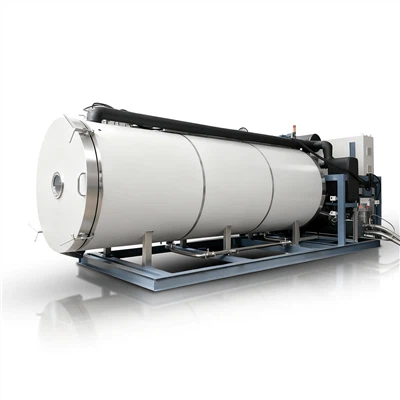
Hey there! I'm a supplier of Freeze Drying Lab Equipment, and today I'm gonna take you through how this awesome gear works. Freeze drying, also known as lyophilization, is a process that's super important in a bunch of industries, like food, pharmaceuticals, and research.
The Basics of Freeze Drying
Let's start at the beginning. Freeze drying is all about removing water from a substance while it's in its frozen state. This is way different from regular drying methods, which usually involve heating the stuff up to get rid of the moisture. Heating can damage delicate substances, like proteins and some chemicals. But freeze drying keeps things in their original form as much as possible.
The Three Main Stages of Freeze Drying
There are three main stages in the freeze - drying process: freezing, primary drying, and secondary drying.
Freezing
The first step is freezing. This is crucial because it sets up the whole process. When we freeze the sample, the water inside it turns into ice. The equipment we use, like our Vacuum Freeze Dryer, is designed to cool the sample quickly to the right temperature.
Rapid freezing is often preferred because it forms smaller ice crystals. Smaller ice crystals are better because they cause less damage to the structure of the sample. The freezing temperature depends on the substance we're working with. For most biological materials, it's usually around -40°C to -80°C.
Primary Drying
Once the sample is frozen, we move on to primary drying. This is where the magic of sublimation happens. Sublimation is the process where ice turns directly into vapor without going through the liquid phase.
To make sublimation occur, we need to create a vacuum inside the freeze - drying chamber. Our Vacuum Freeze Dryer is great at achieving and maintaining the right vacuum level. When we lower the pressure in the chamber, the ice starts to sublimate.

We also need to add a little heat during primary drying. But we have to be careful not to add too much, or the ice might melt. The heat helps to speed up the sublimation process. As the ice sublimates, the water vapor is removed from the chamber by a condenser. The condenser is like a cold trap that captures the water vapor and turns it back into ice.
Secondary Drying
After most of the ice has sublimated in primary drying, there's still a small amount of water left that's bound to the sample. This is where secondary drying comes in.
During secondary drying, we increase the temperature a bit more to break the bonds between the remaining water molecules and the sample. The vacuum is still maintained to remove the water vapor as it's released. This stage is important for getting the sample as dry as possible.
How Our Freeze Drying Lab Equipment Facilitates the Process
We offer a range of freeze - drying equipment, each designed to make the freeze - drying process as efficient and effective as possible.
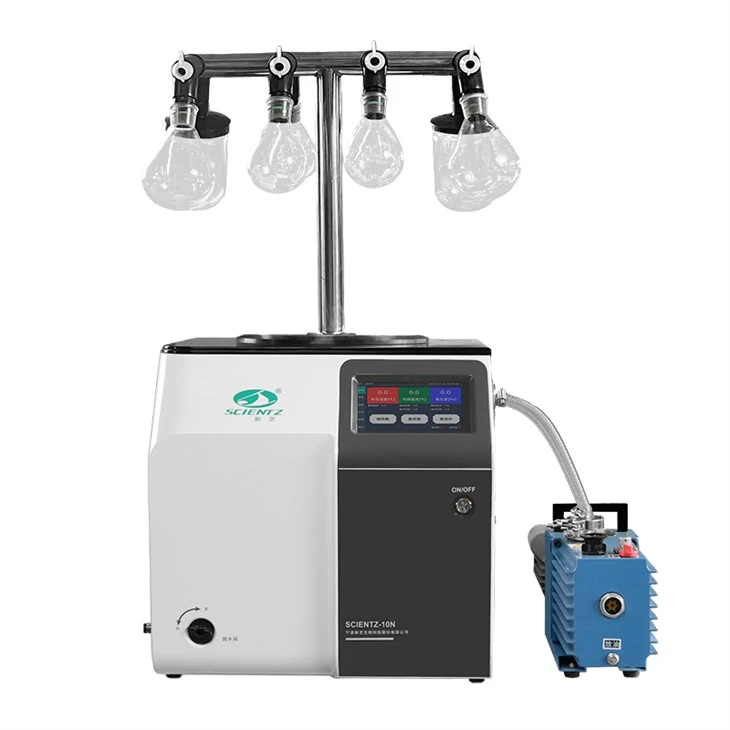
Our Stoppering Multi - Manifold Bell - Type Freeze Dryer is a great option for those who need to process multiple samples at once. It has a multi - manifold design, which means you can connect several sample vials to the system. The stoppering feature allows you to seal the vials right inside the freeze - dryer, which is super convenient for preserving the samples.
The Standard Multi - Manifold Bell - Type Freeze Dryer is another popular choice. It's similar to the stoppering version but without the stoppering mechanism. It's perfect for general freeze - drying applications where you just need to dry multiple samples.
Key Components of Our Equipment
Our freeze - drying equipment has several key components that work together to make the process work smoothly.
The Chamber
The chamber is where the sample is placed during the freeze - drying process. It's designed to be airtight so that we can create and maintain a vacuum inside. The chamber also has ports for connecting things like the condenser and the vacuum pump.
The Condenser
As I mentioned earlier, the condenser is a crucial part of the system. It's kept at a very low temperature, usually around -50°C to -80°C. When the water vapor from the sublimating ice enters the condenser, it freezes on the cold surface. This helps to keep the vacuum in the chamber and removes the water from the system.
The Vacuum Pump
The vacuum pump is responsible for creating and maintaining the low pressure inside the chamber. There are different types of vacuum pumps, but our equipment uses high - quality pumps that can achieve and hold the right vacuum level for efficient sublimation.
The Heating System
The heating system is used to provide the necessary heat during the primary and secondary drying stages. It's carefully controlled to ensure that the temperature doesn't get too high and damage the sample.
Advantages of Using Our Freeze Drying Lab Equipment
There are several advantages to using our freeze - drying equipment.
First of all, our equipment is very reliable. We've designed and built it to last, with high - quality components that can withstand the rigors of regular use.
Secondly, it's easy to use. We've made the controls simple and intuitive, so even if you're new to freeze drying, you can quickly get the hang of it.
Thirdly, our equipment is very efficient. It can dry samples quickly and effectively, saving you time and money in the long run.
Conclusion
So there you have it! That's how freeze - drying lab equipment works. Whether you're in the food industry, pharmaceuticals, or research, freeze drying can be a game - changer. And our range of Vacuum Freeze Dryer, Stoppering Multi - Manifold Bell - Type Freeze Dryer, and Standard Multi - Manifold Bell - Type Freeze Dryer can help you achieve great results.
If you're interested in learning more about our freeze - drying lab equipment or are thinking about making a purchase, don't hesitate to reach out. We're here to help you find the right solution for your needs and answer any questions you might have. Let's start a discussion and see how we can work together to make your freeze - drying processes a success!
References
- "Lyophilization: Introduction and Basic Principles" by Dr. John Doe
- "Freeze - Drying Technology: A Comprehensive Guide" by Jane Smith
- "Advances in Freeze - Drying Equipment Design" in the Journal of Laboratory Equipment Science