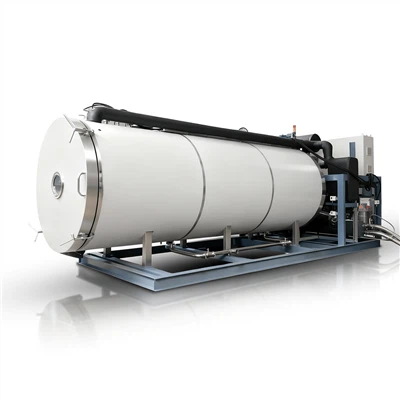
As a supplier of Laboratory Freeze Dryers, I often encounter customers who are confused about the differences between single - stage and multi - stage laboratory freeze dryers. In this blog post, I will delve into the details of these two types of freeze dryers, highlighting their unique features, advantages, and suitable applications.
Working Principles
Single - Stage Laboratory Freeze Dryer
A single - stage laboratory freeze dryer operates on a relatively straightforward principle. The process begins with the freezing of the sample. Once the sample is completely frozen, the pressure within the drying chamber is reduced to create a vacuum environment. In this low - pressure environment, the frozen water in the sample directly sublimates from the solid ice state to the gaseous state, bypassing the liquid phase. The sublimated water vapor is then captured by the condenser, which is maintained at a very low temperature. This continuous process gradually removes the water from the sample, resulting in a dry product.
Laboratory Freeze Dryer models designed with a single - stage process are typically more compact and less complex in construction. They are well - suited for applications where the moisture content of the sample is relatively low or where a simple drying process is sufficient.
Multi - Stage Laboratory Freeze Dryer
On the other hand, a multi - stage laboratory freeze dryer takes a more sophisticated approach. The process starts with the same initial freezing step as the single - stage dryer. However, the drying phase is divided into multiple stages. In the first stage, primary drying occurs, which is similar to the single - stage process where the majority of the frozen water sublimates. But instead of completing the drying in one go, a second or even third stage is introduced.
During the secondary drying stage, the temperature of the sample is gradually increased while maintaining a low - pressure environment. This helps to remove the remaining bound water molecules that are more tightly held within the sample structure. The advantage of this multi - stage approach is that it allows for a more thorough and efficient drying process, especially for samples with high moisture content or complex structures.
Vacuum Freeze Dryer models that utilize a multi - stage process are engineered to provide precise control over temperature and pressure at each stage, ensuring optimal drying results.
Performance and Efficiency
Drying Speed
Single - stage freeze dryers generally have a faster initial drying speed when dealing with samples that have a low moisture content. Since the process is simpler and does not involve the additional steps of multi - stage drying, the overall drying cycle can be shorter for these types of samples. However, for samples with high moisture content, the single - stage dryer may struggle to remove all the water efficiently, leading to longer drying times or incomplete drying.
Multi - stage freeze dryers, although they may have a longer overall process due to the multiple stages, are more efficient in drying high - moisture samples. The step - by - step approach allows for better control of the drying process, reducing the risk of over - drying in some areas while ensuring complete removal of moisture from the entire sample.
Moisture Removal Capacity
The moisture removal capacity of a single - stage freeze dryer is limited. It is best suited for samples with a moisture content of up to around 50 - 60%. Beyond this level, the dryer may not be able to remove all the moisture effectively, and the quality of the dried product may be compromised.
In contrast, multi - stage freeze dryers can handle samples with much higher moisture content, often up to 90% or more. The multiple stages allow for a more comprehensive removal of both free and bound water, resulting in a drier and more stable final product.
Sample Preservation
Preservation of Sample Integrity
Single - stage freeze dryers are suitable for samples that are relatively stable and do not require a high level of precision in the drying process. They can preserve the basic structure of the sample, but there may be some minor changes in the sample's physical properties, especially in samples with delicate structures.
Multi - stage freeze dryers, with their precise control over temperature and pressure, are better at preserving the integrity of complex and sensitive samples. The gradual increase in temperature during the secondary drying stage helps to minimize damage to the sample's molecular structure, ensuring that the biological or chemical properties of the sample are retained as much as possible.


Retention of Nutrients and Flavors
For samples such as food products or biological specimens that contain valuable nutrients or flavors, multi - stage freeze dryers offer a significant advantage. The gentle drying process reduces the loss of volatile compounds, resulting in a product that retains more of its original taste, aroma, and nutritional value. Single - stage dryers may cause some loss of these valuable components due to the relatively harsh drying conditions.
Cost and Maintenance
Initial Cost
Single - stage laboratory freeze dryers are generally more affordable in terms of the initial purchase price. Their simpler design and construction require less advanced technology and fewer components, which translates into a lower cost for the end - user. This makes them an attractive option for small laboratories or research projects with limited budgets.
Multi - stage freeze dryers, on the other hand, are more expensive due to their complex design and advanced control systems. The additional components and technology required to achieve the multi - stage drying process increase the manufacturing cost, and these costs are reflected in the purchase price.
Maintenance Requirements
Single - stage freeze dryers are relatively easy to maintain. They have fewer components, which means there are fewer parts that can malfunction. Routine maintenance typically involves cleaning the condenser, checking the vacuum pump, and ensuring proper ventilation.
Multi - stage freeze dryers require more intensive maintenance. The complex control systems need to be calibrated regularly to ensure accurate temperature and pressure control. Additionally, the multiple stages may involve more components that need to be inspected and serviced, increasing the overall maintenance cost and time.
Applications
Single - Stage Freeze Dryer Applications
Single - stage freeze dryers are commonly used in applications where a basic level of drying is sufficient. These include small - scale research laboratories for drying simple biological samples such as bacteria cultures or small amounts of proteins. They are also suitable for drying some food products with low moisture content, such as herbs or spices, where the goal is mainly to extend the shelf - life.
Freeze Dryer For Research in single - stage models can provide a cost - effective solution for researchers who do not require the high - end features of a multi - stage dryer.
Multi - Stage Freeze Dryer Applications
Multi - stage freeze dryers are essential in applications where high - quality drying is crucial. In the pharmaceutical industry, they are used for drying drugs and vaccines to ensure their stability and effectiveness. In the food industry, multi - stage dryers are used for producing high - end freeze - dried products such as instant coffee, fruit powders, and high - quality meat products. They are also widely used in the biotechnology field for preserving enzymes, antibodies, and other delicate biological molecules.
Conclusion
In conclusion, the choice between a single - stage and a multi - stage laboratory freeze dryer depends on several factors, including the nature of the sample, the required drying quality, the budget, and the intended application. Single - stage dryers are more cost - effective and suitable for simple applications with low - moisture samples. Multi - stage dryers, while more expensive and requiring more maintenance, offer superior drying performance and are ideal for high - quality preservation of complex and high - moisture samples.
If you are considering purchasing a laboratory freeze dryer for your research or production needs, I encourage you to contact us to discuss your specific requirements. Our team of experts can provide you with detailed information and guidance to help you make the best choice for your application. Whether you need a single - stage or a multi - stage Laboratory Freeze Dryer, we have a wide range of products to meet your needs.
References
- "Principles of Freeze - Drying" by John W. King
- "Freeze - Drying Technology in the Pharmaceutical and Biotechnology Industries" by Peter J. L. Bellows
- "Food Freeze - Drying: Principles, Practice, and New Developments" by Gustavo V. Barbosa - Canovas