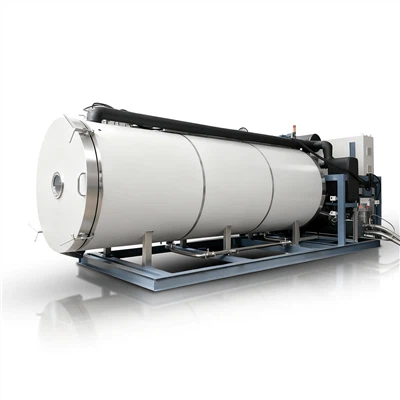
Ensuring the stability of the drying process in a food - grade freeze dryer is crucial for maintaining the quality and safety of food products. As a supplier of Food-grade Freeze Dryer, I understand the significance of this issue and have accumulated a wealth of experience in this field. In this blog, I will share some strategies and considerations to help you achieve a stable drying process in your food - grade freeze dryer.
Understanding the Freeze - Drying Process
Before delving into the methods of ensuring process stability, it is essential to understand the basic principles of freeze - drying. Freeze - drying, also known as lyophilization, is a dehydration process that involves freezing the product, reducing the surrounding pressure, and then removing the ice by sublimation. This process helps to preserve the nutritional value, flavor, and appearance of food products.
The freeze - drying process typically consists of three main stages: freezing, primary drying (sublimation), and secondary drying (desorption). Each stage has its own requirements and challenges, and any instability in one stage can affect the overall quality of the final product.
Factors Affecting the Stability of the Drying Process
1. Temperature Control
Temperature is one of the most critical factors in the freeze - drying process. During the freezing stage, the product must be cooled to a low enough temperature to ensure complete freezing. Inadequate freezing can lead to the formation of large ice crystals, which can damage the cell structure of the food and affect its rehydration properties.
During primary drying, the temperature of the product must be carefully controlled to maintain a stable sublimation rate. If the temperature is too high, the ice may melt instead of subliming, leading to product collapse and reduced quality. On the other hand, if the temperature is too low, the sublimation rate will be slow, resulting in longer drying times and increased energy consumption.
To ensure stable temperature control, it is important to use a high - quality temperature sensor and a reliable control system. Regular calibration of the temperature sensors is also necessary to ensure accurate readings.
2. Pressure Control
Pressure is another key factor in the freeze - drying process. The low pressure environment is necessary for sublimation to occur. During primary drying, the pressure in the drying chamber must be maintained at a level that allows for efficient sublimation. Fluctuations in pressure can disrupt the sublimation process and lead to uneven drying.
A vacuum pump is used to create and maintain the low pressure in the drying chamber. It is important to choose a vacuum pump with sufficient capacity and stability. Regular maintenance of the vacuum pump, including checking for leaks and replacing worn - out parts, is essential to ensure stable pressure control.
3. Product Loading
The way the food product is loaded into the freeze dryer can also affect the stability of the drying process. Uneven loading can lead to differences in heat transfer and mass transfer, resulting in uneven drying. It is important to ensure that the product is evenly distributed on the trays and that there is sufficient space between the trays for air circulation.
The thickness of the product layer also plays a role. A thicker layer of product will take longer to dry and may require more energy. It is recommended to keep the product layer within a reasonable thickness range to ensure uniform drying.
4. Shelf Design
The design of the shelves in the freeze dryer can have a significant impact on the drying process. The shelves should be made of a material with good thermal conductivity to ensure efficient heat transfer to the product. The surface of the shelves should be smooth to prevent the product from sticking and to facilitate easy cleaning.
In addition, the shelves should be designed to allow for uniform airflow within the drying chamber. This can help to ensure that all parts of the product are exposed to the same drying conditions.
Strategies for Ensuring Process Stability
1. Pre - Treatment of the Product
Pre - treatment of the food product before freeze - drying can help to improve the stability of the drying process. For example, blanching can be used to inactivate enzymes in the food, which can prevent discoloration and flavor changes during drying.
Another pre - treatment method is to add cryoprotectants or stabilizers to the product. These substances can help to protect the cell structure of the food during freezing and drying, and can also improve the rehydration properties of the final product.
2. Process Monitoring and Control
Continuous monitoring of the key parameters such as temperature, pressure, and moisture content is essential for ensuring process stability. Modern freeze dryers are equipped with sensors and control systems that can provide real - time data on these parameters.
By analyzing the data, operators can detect any deviations from the set values and take corrective actions in a timely manner. For example, if the temperature is too high, the heating system can be adjusted to lower the temperature. If the pressure is fluctuating, the vacuum pump can be checked for leaks or adjusted to maintain a stable pressure.
3. Regular Maintenance and Calibration
Regular maintenance of the freeze dryer is crucial for ensuring its long - term stability. This includes cleaning the drying chamber, checking the seals for leaks, and lubricating the moving parts. The sensors and control systems should also be calibrated regularly to ensure accurate readings and reliable operation.
In addition, it is important to follow the manufacturer's recommended maintenance schedule and use only genuine replacement parts. This can help to prevent breakdowns and ensure the consistent performance of the freeze dryer.
4. Training of Operators
Well - trained operators are essential for the stable operation of the freeze dryer. Operators should be familiar with the principles of freeze - drying, the operation of the equipment, and the procedures for handling different types of food products.
Training should include both theoretical knowledge and practical skills. Operators should be able to troubleshoot common problems and make adjustments to the process parameters as needed. Regular refresher courses can also be provided to keep the operators updated on the latest techniques and best practices.


Conclusion
Ensuring the stability of the drying process in a food - grade freeze dryer is a complex but achievable goal. By understanding the factors that affect process stability and implementing the appropriate strategies, such as temperature and pressure control, proper product loading, and regular maintenance, you can achieve consistent and high - quality results.
As a supplier of Food Freeze Dryer and Freeze Dryer For Factory Use, we are committed to providing our customers with high - quality equipment and comprehensive technical support. If you are interested in improving the stability of your freeze - drying process or are considering purchasing a new freeze dryer, please feel free to contact us for more information and to discuss your specific needs. We look forward to working with you to achieve your goals in food processing.
References
- "Freeze - Drying Technology: Principles and Practice" by Gustavo V. Barbosa - Canovas, Enrique J. Pothakamury, and Barbara G. Swanson.
- "Food Dehydration: A Comprehensive Review" by M. S. Rahman.
- Technical manuals and documentation provided by the manufacturers of food - grade freeze dryers.