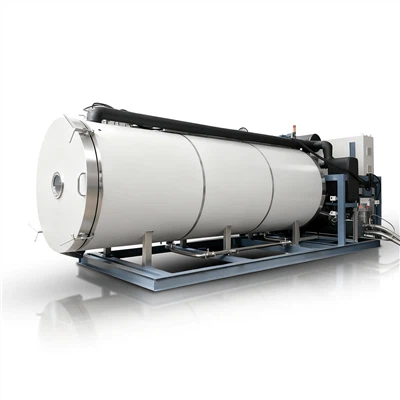
Silicone oil is commonly used in freeze - drying processes due to its excellent thermal properties, chemical stability, and wide temperature range applicability. As a supplier of Silicone Oil Heated Freeze Drying equipment, I've witnessed firsthand how the density of silicone oil can have a profound impact on the freeze - drying process. In this blog, I'll explore the intricate relationship between the density of silicone oil and the freeze - drying process.
The Role of Silicone Oil in Freeze - Drying
Before delving into the effects of density, it's important to understand why silicone oil is used in freeze - drying. In a freeze - drying system, substances are first frozen and then placed under a high vacuum. The frozen water in the sample sublimes directly from a solid to a vapor, removing it from the product. Silicone oil serves as a heat - transfer medium in silicone oil heated freeze dryers. It transfers heat to the shelves where the samples are placed, ensuring a controlled and efficient sublimation process.
How Density Affects Heat Transfer
The density of silicone oil plays a crucial role in heat transfer, which is the cornerstone of the freeze - drying process. Heat transfer occurs through conduction, convection, and radiation. In a freeze - drying setup, the silicone oil transfers heat to the shelves mainly through convection.
A higher - density silicone oil has more molecules per unit volume. This means that there are more contact points for heat transfer. When the silicone oil is heated, the molecules in the high - density oil can transfer thermal energy more effectively than those in a low - density oil. This results in a more rapid and uniform heating of the shelves. Conversely, a low - density silicone oil may lead to slower heat transfer and temperature variations across the shelves. If the shelves are not heated evenly, the samples may experience inconsistent sublimation rates, which can affect the quality and efficiency of the freeze - drying process.
Influence on System Pressure and Vacuum
The density of silicone oil can also impact the pressure within the freeze - drying system. During the freeze - drying process, a high vacuum is required to facilitate sublimation. The silicone oil's density affects its vapor pressure. A lower - density silicone oil generally has a higher vapor pressure.
In a freeze - drying system operating under vacuum, if the silicone oil has a high vapor pressure (due to low density), it can contribute to an increase in the system pressure. This is because some of the silicone oil molecules may vaporize and enter the vacuum environment. An elevated system pressure can impede the sublimation process, as sublimation occurs more effectively at lower pressures. Therefore, choosing a silicone oil with an appropriate density is crucial to maintaining the desired vacuum level in the freeze - drying system.
Effect on Equipment Wear and Tear
The density of silicone oil can also affect the wear and tear of the freeze - drying equipment. In systems where the silicone oil is circulated using pumps, a higher - density oil can put more stress on the pump components. The pump has to work harder to move the more viscous (and often higher - density) oil through the system.
Over time, this can lead to increased wear on the pump seals, valves, and impellers. On the other hand, a low - density oil may be more prone to leakage due to its lower viscosity. This can not only cause losses of the silicone oil but also contaminate the freeze - drying environment. Thus, finding the right balance in silicone oil density is essential for the long - term operation and maintenance of the Heated Silicone Oil Freeze Dryer.
Impact on Product Quality
The quality of the freeze - dried product is directly related to the efficiency and consistency of the freeze - drying process. As mentioned earlier, the density of silicone oil affects heat transfer and system pressure, both of which are critical factors in determining the quality of the final product.
If the heat transfer is uneven due to an inappropriate silicone oil density, the samples may not dry uniformly. This can result in differences in moisture content, particle size, and product appearance. For example, in the pharmaceutical industry, where precise freeze - drying is crucial for the stability and efficacy of drugs, inconsistent drying can lead to variations in drug potency and shelf - life. In the food industry, unevenly dried products may have a shorter shelf - life, reduced flavor, and a less appealing texture.
Case Studies and Practical Considerations
In practical applications, different types of freeze - drying operations may require silicone oils with different densities. For small - scale laboratory freeze - drying processes, a lower - density silicone oil may be more suitable. This is because the equipment is usually less powerful, and a lower - density oil requires less energy to circulate. Additionally, the smaller volume of the system may be less sensitive to minor variations in heat transfer and pressure.
On the other hand, large - scale industrial freeze - drying operations often demand higher - density silicone oils. These operations require efficient heat transfer over large surface areas and strict control of system pressure. For instance, a large - scale pharmaceutical manufacturing facility using a Stoppering Silicone Oil Heating In - Situ Freeze Dryer needs a high - density silicone oil to ensure uniform heating of a large number of product vials.
When selecting a silicone oil for a freeze - drying process, it's also important to consider its chemical compatibility with the materials in the system. Some low - density silicone oils may react with certain plastics or rubbers used in the freeze - dryer, leading to corrosion or degradation.
Benefits of Our Silicone Oil Heated Freeze Drying Equipment
As a supplier of Silicone Oil Heated Freeze Drying equipment, we offer a wide range of solutions tailored to different applications. Our equipment is designed to work with silicone oils of varying densities, ensuring optimal performance for different freeze - drying requirements.
Our Heated Silicone Oil Freeze Dryer features advanced temperature control systems that can compensate for the effects of different silicone oil densities. This ensures that the samples are heated uniformly, regardless of the oil used. Our Stoppering Silicone Oil Heating In - Situ Freeze Dryer is equipped with precise vacuum control mechanisms that can maintain the desired pressure levels even when using silicone oils with different vapor pressures.
We also provide comprehensive technical support to help our customers select the most appropriate silicone oil density for their specific processes. Our team of experts can analyze your product requirements, equipment specifications, and process parameters to recommend the ideal silicone oil and freeze - drying setup.


Contact Us for Procurement and Consultation
If you're in the market for a high - quality freeze - drying solution, we invite you to contact us for procurement and consultation. Our experienced sales team is ready to answer your questions, provide detailed product information, and assist you in finding the best Silicone Oil Heated Freeze Drying equipment for your needs. Whether you're a small laboratory or a large industrial manufacturer, we can offer customized solutions to meet your specific requirements.
References
- "Freeze - Drying Technology: Principles and Practice" by M. A. Rahman.
- "Silicone Fluids and their Applications" edited by R. A. Cross.
- "Heat Transfer in Industrial Processes" by J. P. Holman.