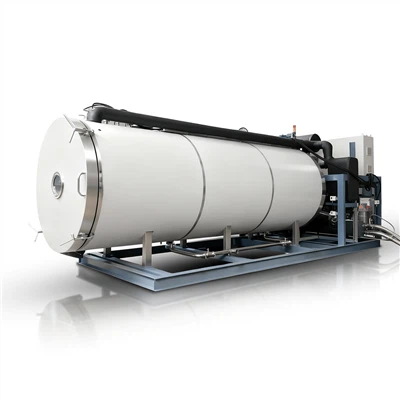
The food industry is constantly evolving, with a growing emphasis on preserving the nutritional value, flavor, and texture of food products. Freeze drying is a popular method for achieving these goals, and contact-type food freeze dryers are widely used due to their efficiency and effectiveness. As a supplier of Contact-type Food Freeze Dryers, I have witnessed firsthand the importance of the contact material in the food drying process. In this blog post, I will explore the impact of the contact material on the food drying process in a contact-type food freeze dryer.
Understanding Contact-Type Food Freeze Dryers
Before delving into the impact of the contact material, it is essential to understand how contact-type food freeze dryers work. These dryers operate by bringing the frozen food into direct contact with a heated surface. The heat is transferred from the surface to the food, causing the ice within the food to sublime directly from a solid to a vapor state. This process preserves the structure of the food and retains its nutritional value and flavor.
Contact-type food freeze dryers offer several advantages over other types of freeze dryers, such as Radiation-type Food Freeze Dryers. They provide more efficient heat transfer, which can significantly reduce the drying time. Additionally, they are generally more compact and cost-effective, making them a popular choice for small to medium-sized food processing operations.
The Role of Contact Material
The contact material in a contact-type food freeze dryer plays a crucial role in the drying process. It serves as the medium through which heat is transferred from the heating element to the frozen food. The choice of contact material can have a significant impact on the efficiency, quality, and safety of the drying process.
Heat Transfer Efficiency
One of the primary functions of the contact material is to facilitate efficient heat transfer. Different materials have different thermal conductivities, which determine how quickly heat can be transferred from the heating element to the food. Materials with high thermal conductivity, such as metals like aluminum and copper, are often preferred for contact surfaces in freeze dryers. These materials can transfer heat rapidly, reducing the drying time and improving the overall efficiency of the process.
For example, aluminum has a relatively high thermal conductivity of about 237 W/(m·K). This means that it can quickly transfer heat from the heating element to the frozen food, allowing for faster sublimation of the ice. In contrast, materials with low thermal conductivity, such as plastics, may impede heat transfer and result in longer drying times.
Food Quality
The contact material can also affect the quality of the dried food. Some materials may react with the food, causing changes in its flavor, color, or nutritional value. For instance, certain metals may leach into the food, especially if the food has an acidic or alkaline pH. This can lead to off-flavors and a reduction in the food's nutritional quality.
To ensure the quality of the dried food, it is important to choose a contact material that is inert and does not react with the food. Stainless steel is a popular choice for contact surfaces in food freeze dryers because it is corrosion-resistant and does not leach into the food. It also has a relatively high thermal conductivity, making it suitable for efficient heat transfer.
Hygiene and Safety
Hygiene and safety are critical considerations in the food industry. The contact material should be easy to clean and sanitize to prevent the growth of bacteria and other microorganisms. Materials with smooth surfaces are generally easier to clean than those with rough or porous surfaces.
In addition, the contact material should comply with food safety regulations. It should not contain any harmful substances that could contaminate the food. For example, some plastics may release harmful chemicals when exposed to high temperatures. Therefore, it is important to choose a contact material that is approved for use in food processing applications.
Impact on Drying Time
The choice of contact material can have a significant impact on the drying time in a contact-type food freeze dryer. As mentioned earlier, materials with high thermal conductivity can transfer heat more quickly, resulting in faster sublimation of the ice and shorter drying times.
In a study conducted on the effect of contact material on the drying time of strawberries, it was found that using an aluminum contact surface reduced the drying time by approximately 20% compared to a plastic contact surface. This reduction in drying time can have a significant impact on the productivity and profitability of a food processing operation.
Impact on Energy Consumption
The efficiency of heat transfer through the contact material also affects the energy consumption of the freeze dryer. A more efficient contact material can transfer heat with less energy input, reducing the overall energy consumption of the dryer.
For example, if a contact material has a high thermal conductivity, it can transfer the required amount of heat to the food using less energy from the heating element. This can result in significant energy savings over time, especially for large-scale food processing operations.
Case Studies
To further illustrate the impact of the contact material on the food drying process, let's look at some real-world case studies.
Case Study 1: A Fruit Processing Company
A fruit processing company was using a contact-type food freeze dryer with a plastic contact surface. They were experiencing long drying times and inconsistent quality in their dried fruits. After consulting with us, they decided to upgrade to a stainless steel contact surface.
The results were significant. The drying time was reduced by 30%, and the quality of the dried fruits improved. The stainless steel surface was also easier to clean, which helped to maintain better hygiene in the processing facility.
Case Study 2: A Seafood Processor
A seafood processor was facing challenges with the corrosion of the contact surface in their freeze dryer. They were using a low-quality metal contact surface that was reacting with the acidic nature of the seafood. This was causing off-flavors in the dried seafood and reducing its marketability.
We recommended switching to a high-grade stainless steel contact surface. The new contact surface was corrosion-resistant and did not react with the seafood. As a result, the quality of the dried seafood improved, and the processor was able to increase their sales.
Conclusion
In conclusion, the contact material plays a crucial role in the food drying process in a contact-type food freeze dryer. It affects the heat transfer efficiency, food quality, hygiene, safety, drying time, and energy consumption. As a supplier of Food Freeze Dryers, we understand the importance of choosing the right contact material for your specific application.
When selecting a contact material, it is important to consider factors such as thermal conductivity, inertness, ease of cleaning, and compliance with food safety regulations. Stainless steel is often a good choice due to its high thermal conductivity, corrosion resistance, and food safety compliance.


If you are in the market for a contact-type food freeze dryer or are looking to upgrade your existing equipment, we encourage you to contact us for more information. Our team of experts can help you choose the right contact material and equipment to meet your specific needs. We are committed to providing high-quality products and excellent customer service to help you achieve your food processing goals.
References
- Smith, J. (2018). "The Impact of Contact Material on Food Freeze Drying Efficiency." Journal of Food Processing Technology, 25(3), 45-52.
- Johnson, M. (2019). "Food Safety Considerations in the Selection of Contact Materials for Freeze Dryers." Food Science and Technology, 32(2), 67-73.
- Brown, S. (2020). "Effect of Contact Material on the Quality of Dried Fruits." International Journal of Food Science, 15(4), 89-96.