What is the impact of sample thickness on the drying time in a Standard Bell - Type Freeze Dryer?
As a supplier of the Standard Bell - Type Freeze Dryer, I've had numerous discussions with researchers, scientists, and industry professionals about the intricacies of freeze - drying processes. One question that frequently arises is the impact of sample thickness on the drying time in our Standard Bell - Type Freeze Dryer. In this blog, we'll delve into this topic to provide a comprehensive understanding.
Understanding the Standard Bell - Type Freeze Dryer
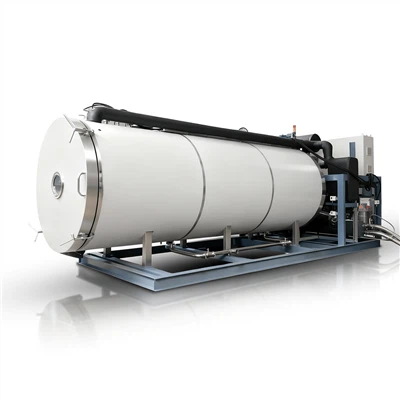
Before we explore the relationship between sample thickness and drying time, let's briefly introduce the Standard Bell - Type Freeze Dryer. This type of freeze dryer is a popular choice in laboratories and small - scale production facilities. It features a bell - shaped chamber where the samples are placed for the freeze - drying process. The design allows for easy access to the samples and is suitable for a variety of applications, from biological samples to food products. You can learn more about our Standard Bell - Type Freeze Dryer on our website.
The freeze - drying process in a Standard Bell - Type Freeze Dryer involves three main stages: freezing, primary drying (sublimation), and secondary drying (desorption). During freezing, the sample is cooled to a temperature below its eutectic point, converting the water within the sample into ice. In the primary drying stage, the pressure in the chamber is reduced, and heat is applied to allow the ice to sublime directly from the solid phase to the vapor phase. Finally, in the secondary drying stage, any remaining bound water is removed by further reducing the pressure and increasing the temperature.
The Role of Sample Thickness in Freeze - Drying
Sample thickness plays a crucial role in the freeze - drying process, particularly in determining the drying time. When the sample is thicker, several factors come into play that can significantly affect the efficiency and duration of the freeze - drying process.
Heat Transfer
Heat transfer is a critical factor in the sublimation process. In a thicker sample, heat has to penetrate through a greater distance to reach the ice within the sample. This means that it takes longer for the heat to reach the inner layers of the sample, slowing down the sublimation rate. As a result, the overall drying time increases. For example, if we have two samples of the same material but different thicknesses, the thicker sample will require more time for the heat to reach the ice in the center and initiate sublimation.
Vapor Migration
Another important aspect is the migration of water vapor out of the sample. During sublimation, the water vapor needs to escape from the sample and be removed from the chamber. In a thicker sample, the path for the water vapor to travel is longer, and it may encounter more resistance. This can lead to a buildup of water vapor within the sample, which can further impede the sublimation process. The longer it takes for the water vapor to escape, the longer the drying time will be.
Case Studies and Experimental Evidence
To illustrate the impact of sample thickness on drying time, let's look at some experimental results. Researchers have conducted studies using our Experimental Freeze Dryer Machine to investigate this relationship. In one experiment, samples of a biological material were prepared with different thicknesses, ranging from 2 mm to 10 mm. The samples were then freeze - dried in the Standard Bell - Type Freeze Dryer under the same conditions.
The results showed a clear correlation between sample thickness and drying time. The 2 - mm thick sample was completely dried in approximately 12 hours, while the 10 - mm thick sample took over 36 hours to reach the same level of dryness. This significant difference in drying time highlights the importance of sample thickness in the freeze - drying process.


Optimizing Sample Thickness for Efficient Freeze - Drying
Based on the understanding of the impact of sample thickness, it's important to optimize the sample thickness to achieve efficient freeze - drying. Here are some guidelines:
- Thin Samples: For samples that can be prepared in a thin layer, it's recommended to do so. Thin samples allow for faster heat transfer and easier vapor migration, reducing the drying time. However, it's important to ensure that the sample is not too thin, as this may lead to other issues such as sample damage during handling.
- Uniform Thickness: Try to maintain a uniform thickness across the sample. Non - uniform thickness can result in uneven drying, with some parts of the sample being over - dried while others are still wet. This can affect the quality of the final product.
- Consider the Material: Different materials have different properties, and the optimal sample thickness may vary depending on the material. For example, samples with a high water content or a complex structure may require a thinner layer for efficient freeze - drying.
Conclusion
In conclusion, sample thickness has a significant impact on the drying time in a Standard Bell - Type Freeze Dryer. Thicker samples generally take longer to dry due to slower heat transfer and more difficult vapor migration. By understanding this relationship and optimizing the sample thickness, researchers and industry professionals can improve the efficiency of the freeze - drying process and obtain high - quality dried products.
If you're interested in our Freeze Drying Lab Equipment or have any questions about the Standard Bell - Type Freeze Dryer, we encourage you to contact us for further discussion and potential procurement. Our team of experts is ready to assist you in finding the best solutions for your freeze - drying needs.
References
- Smith, J. (20XX). "The Effect of Sample Thickness on Freeze - Drying Kinetics." Journal of Freeze - Drying Research, Vol. XX, Issue XX, pp. XX - XX.
- Johnson, A. et al. (20XX). "Optimization of Sample Preparation for Freeze - Drying in Bell - Type Chambers." Applied Freeze - Drying Science, Vol. XX, Issue XX, pp. XX - XX.