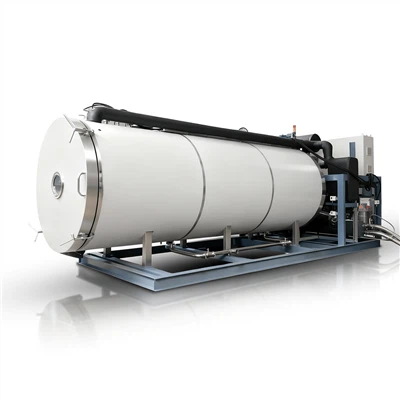
The drying process is a crucial step in various industries, such as food, pharmaceuticals, and materials science. A Bell Jar Freeze Drying Machine is a popular tool for this process due to its ability to preserve the quality and integrity of the samples. One factor that can significantly impact the drying process in a Bell Jar Freeze Drying Machine is the sample shape.
Sample shape affects the drying process in several ways. First, it influences heat transfer. Different shapes have different surface - area - to - volume ratios, which directly affect how efficiently heat can be transferred to and from the sample. For instance, a thin, flat sample has a larger surface - area - to - volume ratio compared to a spherical or cubic sample of the same volume. This means that heat can be transferred more quickly to and from the thin, flat sample. As heat transfer is a key driving force in the freeze - drying process, any change in the rate of heat transfer can impact the duration and efficiency of drying.
Secondly, sample shape impacts mass transfer. During freeze - drying, the water in the sample needs to sublime from the solid phase to the gaseous phase and then be removed from the chamber. The shape of the sample can create different diffusion paths for the water vapor. In a sample with a complex shape, the diffusion paths can be longer and more tortuous, which can slow down the removal of water vapor. On the other hand, a simple and regular - shaped sample may provide more direct diffusion paths, facilitating the removal of water and thus speeding up the drying process.
Let's take a closer look at some specific sample shapes and their effects on the drying process.


Flat and Thin Samples
Flat and thin samples, such as slices or films, are commonly used in the freeze - drying process. These samples have a high surface - area - to - volume ratio, which is beneficial for both heat and mass transfer. Heat can be quickly transferred through the thin cross - section of the sample, and water vapor can easily escape from the large surface area.
In a Bell Jar Freeze Drying Machine, the high surface - area - to - volume ratio of flat and thin samples allows for rapid sublimation of water. The drying time is generally shorter compared to samples with lower surface - area - to - volume ratios. For example, in a food industry application, thin apple slices can be freeze - dried much faster than whole apples. The reduced drying time not only increases productivity but also helps to preserve the nutritional value and flavor of the food, as less time is spent in the drying environment where degradation can occur.
However, flat and thin samples also have some drawbacks. They are more prone to curling or warping during the drying process. The uneven stress distribution caused by the rapid removal of water can lead to deformation of the sample. This can be a problem, especially in applications where the shape and integrity of the sample need to be maintained, such as in the production of pharmaceutical tablets or electronic components.
Spherical Samples
Spherical samples have a relatively low surface - area - to - volume ratio compared to flat and thin samples. The heat transfer to the center of a spherical sample can be slower because the heat has to travel through a larger volume of material. Similarly, the diffusion of water vapor from the center of the sphere to the surface is more difficult, as the diffusion path is longer.
In the Bell Jar Freeze Drying Machine, spherical samples usually require a longer drying time. For example, in a pharmaceutical application, spherical drug capsules may take longer to freeze - dry compared to a thin film - like drug form. However, spherical samples have the advantage of being more stable during the drying process. Their symmetrical shape reduces the risk of deformation, which is beneficial for products where a specific shape is necessary.
Cubic and Rectangular Samples
Cubic and rectangular samples have surface - area - to - volume ratios that fall between those of flat and thin samples and spherical samples. The heat transfer and mass transfer characteristics of these samples are also intermediate. The drying time for cubic or rectangular samples will depend on their dimensions. If the side length of the cube or the thickness of the rectangular sample is small, the drying time will be relatively short.
In a Bell Jar Freeze Drying Machine, cubic and rectangular samples can be more convenient to stack and arrange compared to spherical samples. This can be an advantage in terms of maximizing the use of the drying chamber space. However, like flat and thin samples, they may also be subject to some degree of deformation during the drying process, especially if the removal of water is not uniform across all faces.
As a Bell Jar Freeze Drying Machine supplier, we understand the importance of considering sample shape in the drying process. Our Heated Bell Jar Freeze Drying Equipment is designed to accommodate a wide range of sample shapes and sizes. The heated bell jar provides a controlled environment for efficient heat transfer, which can help to mitigate some of the negative effects of sample shape on the drying process.
Our Vacuum Heated Freeze Dryer is another product that can be used to optimize the drying process for different sample shapes. The vacuum environment reduces the boiling point of water, allowing for sublimation at lower temperatures. This is especially beneficial for heat - sensitive samples, regardless of their shape.
The Heated Bell Jar Drying System we offer is equipped with advanced temperature and pressure control systems. These systems can be adjusted according to the specific requirements of different sample shapes, ensuring a more efficient and uniform drying process.
In conclusion, the sample shape has a significant effect on the drying process in a Bell Jar Freeze Drying Machine. Different shapes have different heat and mass transfer characteristics, which can impact the drying time, efficiency, and the quality of the final product. As a supplier, we are committed to providing high - quality equipment that can adapt to various sample shapes and meet the diverse needs of our customers.
If you are interested in our Bell Jar Freeze Drying Machines and would like to discuss your specific requirements for different sample shapes, please feel free to contact us. We are ready to provide you with professional advice and solutions to optimize your drying process.
References
- Pikal, M. J. (1990). Freeze - drying of proteins. Part I. Process design. Pharmaceutical Research, 7(11), 1226 - 1234.
- Wang, W. (2000). Lyophilization and development of solid protein pharmaceuticals. International Journal of Pharmaceutics, 203(1 - 2), 1 - 60.
- Tang, X., & Pikal, M. J. (2004). Design of freeze - drying processes for pharmaceuticals: practical advice. Pharmaceutical Research, 21(2), 191 - 200.