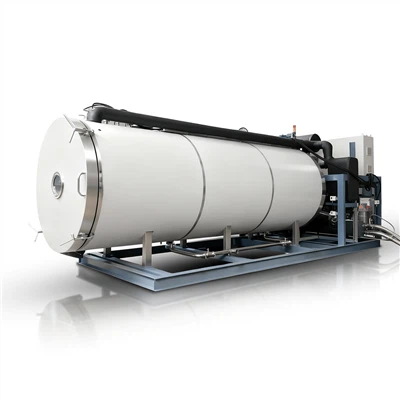
What is the Drying Uniformity of a Batch Production Freeze Dryer?
In the world of pharmaceutical, food, and biotech industries, batch production freeze dryers play a crucial role in preserving the quality and efficacy of various products. One of the most important aspects of a reliable batch freeze - drying process is the drying uniformity. As a leading supplier of batch production freeze dryers, I'd like to delve into the concept of drying uniformity, its significance, influencing factors, and how our products ensure top - notch performance.
Understanding Drying Uniformity
Drying uniformity refers to the degree to which all products within a batch are dried to the same extent during the freeze - drying process. In an ideal scenario, each vial or container in a batch of freeze - dried products should have the same moisture content, color, texture, and biological activity. For instance, in pharmaceutical manufacturing, where drugs are often freeze - dried for long - term storage and stability, inconsistent drying can lead to variations in potency. If some vials have higher moisture content than others, the drugs in those vials are more likely to degrade over time, which can compromise patient safety and the product's effectiveness.
The Significance of Drying Uniformity
- Product Quality: Uniform drying is directly linked to product quality. In the food industry, batch - freeze - dried fruits or vegetables with consistent moisture levels will have the same taste, texture, and shelf - life. If there are differences in drying, some products may spoil faster, while others may be overly dried, affecting their rehydration properties and overall consumer acceptance.
- Regulatory Compliance: Many industries, especially pharmaceuticals, are subject to strict regulatory requirements. Regulatory bodies such as the FDA (Food and Drug Administration) in the United States demand that products meet specific standards of quality and consistency. Non - uniform drying can lead to products failing to meet these standards, resulting in rejection and potential financial losses for manufacturers.
- Cost - Efficiency: When drying is uniform, there is less risk of product wastage. Manufacturers do not have to discard batches that do not meet quality control standards due to inconsistent drying. This not only saves on raw materials but also on the energy and labor costs associated with the production process.
Factors Affecting Drying Uniformity
- Loading Pattern: How the products are loaded into the freeze dryer can significantly impact drying uniformity. If vials or trays are not evenly spaced or stacked, there may be variations in heat transfer and mass transfer. For example, if vials are placed too close together, the evaporation of water vapor may be restricted, leading to uneven drying.
- Shelf Temperature Distribution: The temperature across the shelves in a batch production freeze dryer is not always perfectly uniform. Temperature gradients can occur due to factors such as the design of the heating and cooling systems, the location of sensors, and the presence of insulation. Even small differences in shelf temperature can cause variations in the sublimation rate of the frozen product, resulting in non - uniform drying.
- Vapor Flow: Proper vapor flow is essential for efficient and uniform drying. If the vapor cannot escape freely from the product, it can cause re - condensation and uneven moisture removal. Obstructions in the drying chamber, such as improper placement of racks or products, can disrupt the vapor flow and lead to uneven drying.
- Product Characteristics: The physical and chemical properties of the product itself can also affect drying uniformity. For example, products with different viscosities, solid contents, or surface areas may dry at different rates. A more viscous product may take longer to dry as it is more difficult for water molecules to diffuse out of the product matrix.
How Our Batch Production Freeze Dryers Ensure Drying Uniformity
- Advanced Shelf Technology: Our batch production freeze dryers are equipped with state - of the - art shelf technology. The shelves are designed to provide a highly uniform temperature distribution across the entire surface. We use advanced heating and cooling systems that are carefully calibrated to minimize temperature gradients. Additionally, the shelves are made of high - quality materials with excellent thermal conductivity to ensure efficient heat transfer to the products.
- Optimal Chamber Design: The design of our drying chambers takes into account the importance of vapor flow. We have engineered the chambers to provide a smooth and unrestricted path for water vapor to escape. This is achieved through the careful placement of vents, baffles, and racks. The result is a more efficient drying process with improved uniformity.
- Precise Process Control: Our freeze dryers are equipped with advanced sensors and control systems that allow for precise monitoring and adjustment of the drying process. These systems can detect even the slightest variations in temperature, pressure, and moisture content and make real - time adjustments to ensure that all products in a batch are dried uniformly.
Types of Our Batch Production Freeze Dryers
We offer a range of batch production freeze dryers to meet the diverse needs of our customers.
- Vial Production Freeze Dryer: This type of freeze dryer is specifically designed for the production of freeze - dried vials. It is ideal for pharmaceutical and biotech companies that require high - precision and uniform drying of small - volume products.
- Raw Material Liquid Production Freeze Dryer: Our raw material liquid production freeze dryers are suitable for large - scale production of freeze - dried raw materials. They can handle a wide range of liquid volumes and are designed to ensure uniform drying of the liquid products.
The Batch Freeze Drying Process
To better understand how our freeze dryers achieve drying uniformity, it's important to know about the Batch Freeze Drying Process. The process typically consists of three main stages: freezing, primary drying, and secondary drying.


- Freezing: The product is first frozen to a very low temperature to convert the water within it into ice. This stage is crucial as the quality of the freezing process can affect the subsequent drying stages. Our freeze dryers use advanced freezing techniques to ensure that the product is frozen uniformly.
- Primary Drying: During this stage, the pressure in the drying chamber is reduced, and heat is applied to the shelves. The ice in the product sublimates directly from the solid state to the gaseous state, removing most of the water. Our precise control of temperature and pressure during primary drying helps to achieve uniform sublimation across all products in the batch.
- Secondary Drying: The final stage involves removing any remaining bound water from the product. The temperature is slightly increased, and the pressure is further reduced. Our freeze dryers are designed to optimize this stage to ensure that all products reach the desired moisture content.
Contact Us for Procurement
If you are in the market for a high - quality batch production freeze dryer that can ensure excellent drying uniformity, we are here to help. Our team of experts is ready to provide you with detailed information about our products, answer your questions, and assist you in finding the best solution for your specific needs. Whether you are a small - scale producer or a large - scale industrial manufacturer, we have the right freeze dryer for you. Contact us today to start the procurement process and take your production to the next level.
References
- [1] Pikal, M. J. (2009). Freeze - drying of biopharmaceuticals. Annual Review of Chemical and Biomolecular Engineering, 1, 163 - 191.
- [2] Wang, W. (2000). Lyophilization and development of solid protein pharmaceuticals. International Journal of Pharmaceutics, 203(1 - 2), 1 - 60.
- [3] Tang, X., & Pikal, M. J. (2004). Design of freeze - drying processes for pharmaceuticals: Practical advice. Pharmaceutical Research, 21(2), 191 - 200.