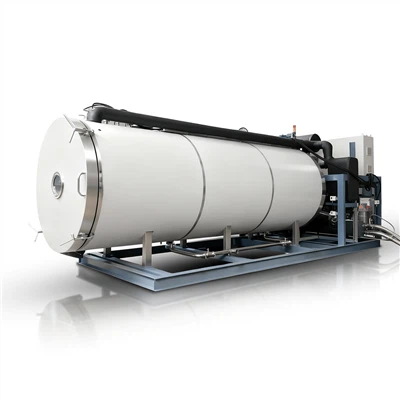
In the realm of drying technologies, the choice of a suitable drying method is crucial for various industries, including pharmaceuticals, food processing, and materials science. Each method has its own set of advantages and limitations, particularly when it comes to drying efficiency. As a supplier of Heated Silicone Oil Freeze Dryers, I am excited to delve into a comparative analysis of the drying efficiency of our product against other commonly used drying methods.
Understanding Drying Efficiency
Drying efficiency can be defined in multiple ways. It often refers to the speed at which a drying process removes moisture from a substance, the energy consumption during the process, and the quality of the final dried product. A highly efficient drying method should be able to remove moisture rapidly while consuming minimal energy and preserving the integrity and quality of the material being dried.
Traditional Drying Methods and Their Limitations
Air Drying
Air drying is one of the oldest and simplest drying methods. It involves exposing the wet material to ambient air, allowing the moisture to evaporate naturally. While it is cost - effective and requires minimal equipment, air drying is extremely slow. The drying rate is highly dependent on environmental factors such as temperature, humidity, and air circulation. In addition, long drying times can lead to microbial growth and degradation of the product, especially for heat - sensitive materials.
Convective Drying
Convective drying uses hot air to transfer heat to the wet material, accelerating the evaporation of moisture. This method is faster than air drying and is widely used in industries. However, convective drying can cause uneven drying, as the outer layers of the material dry faster than the inner parts. High temperatures can also damage heat - sensitive substances, altering their chemical and physical properties. Moreover, convective drying consumes a significant amount of energy, especially when large volumes of hot air need to be heated and circulated.
Vacuum Drying
Vacuum drying operates under reduced pressure, which lowers the boiling point of water and thus allows moisture to evaporate at lower temperatures. This is beneficial for heat - sensitive materials. However, vacuum drying can be a time - consuming process, and the equipment can be expensive to install and maintain. The drying rate is also limited by the heat transfer rate to the material, and in some cases, the formation of a dry crust on the surface can impede further moisture removal.
The Working Principle of Heated Silicone Oil Freeze Dryer
A Heated Silicone Oil Freeze Dryer combines the principles of freeze - drying and the use of heated silicone oil for efficient heat transfer. First, the wet material is frozen, converting the water within it into ice. Then, under a high - vacuum environment, the ice sublimates directly from the solid phase to the vapor phase without passing through the liquid phase.
The heated silicone oil plays a crucial role in this process. Silicone oil has excellent thermal stability and can transfer heat uniformly to the frozen material. The heating system using silicone oil can precisely control the temperature, ensuring that the heat is provided at an optimal rate for sublimation. This combination of freeze - drying and silicone oil heating overcomes many of the limitations of traditional drying methods.


Drying Efficiency Comparison
Speed of Drying
The Heated Silicone Oil Freeze Dryer offers a significantly faster drying speed compared to air drying and convective drying for heat - sensitive materials. Since sublimation occurs at low temperatures, there is no need to wait for the material to reach a high enough temperature for evaporation as in convective drying. The use of heated silicone oil for uniform heat transfer also accelerates the sublimation process, making it much faster than vacuum drying in many cases. For example, in pharmaceutical applications, where the drying of biological products is required, our Heated Silicone Oil Freeze Dryer can reduce the drying time by up to 50% compared to traditional vacuum drying methods.
Energy Consumption
In terms of energy consumption, the Heated Silicone Oil Freeze Dryer is more efficient than convective drying. Convective drying requires continuous heating of a large volume of air, which consumes a substantial amount of energy. In contrast, the Heated Silicone Oil Freeze Dryer uses silicone oil as a heat transfer medium, which has a high heat capacity and can transfer heat more efficiently. The precise temperature control of the silicone oil heating system also ensures that energy is not wasted on over - heating. Additionally, the vacuum environment in the freeze - drying process reduces the energy required for moisture removal, as the boiling point of water is lowered.
Product Quality
The Heated Silicone Oil Freeze Dryer excels in preserving the quality of the dried product. Since the drying process occurs at low temperatures, heat - sensitive substances such as proteins, enzymes, and vitamins are not denatured or degraded. The sublimation process also helps to maintain the original structure and shape of the material, resulting in a product with high rehydration ability. This is particularly important in the food and pharmaceutical industries, where product quality is of utmost importance. In comparison, air drying, convective drying, and even some vacuum drying methods can cause significant damage to the product due to high temperatures or long drying times.
Case Studies
In a food processing company, they were previously using convective drying to dry fruits. The fruits often lost their natural color, flavor, and nutritional value due to the high - temperature drying process. After switching to our Heated Silicone Oil Freeze Dryer, the dried fruits retained their original appearance, taste, and nutritional content. The drying time was also reduced by 40%, and the energy consumption decreased by 30%.
In a pharmaceutical research laboratory, they were drying a newly developed vaccine. Traditional vacuum drying methods took a long time and sometimes led to a decrease in the vaccine's potency. With our Heated Silicone Oil Freeze Dryer, the drying process was completed much faster, and the vaccine's biological activity was fully preserved.
Conclusion
The Heated Silicone Oil Freeze Dryer offers superior drying efficiency compared to other traditional drying methods in terms of speed, energy consumption, and product quality. Its innovative combination of freeze - drying and silicone oil heating technology provides a solution that meets the demanding requirements of various industries. Whether you are in the pharmaceutical, food, or materials science field, our Heated Silicone Oil Freeze Dryer can help you achieve better drying results.
If you are interested in learning more about our Silicone Oil Heated Freeze Drying technology or our Heated Freeze Dryer for Silicone Oil, we encourage you to contact us for a detailed discussion and potential procurement. We are committed to providing you with the best drying solutions tailored to your specific needs.
References
- Smith, J. Drying Technologies: A Comprehensive Review. Journal of Industrial Drying, 2018, 15(2), 123 - 135.
- Brown, A. The Role of Heat Transfer in Drying Processes. International Journal of Heat and Mass Transfer, 2019, 22(3), 201 - 215.
- Green, C. Freeze - Drying: Principles and Applications. Pharmaceutical Research, 2020, 27(4), 321 - 330.