

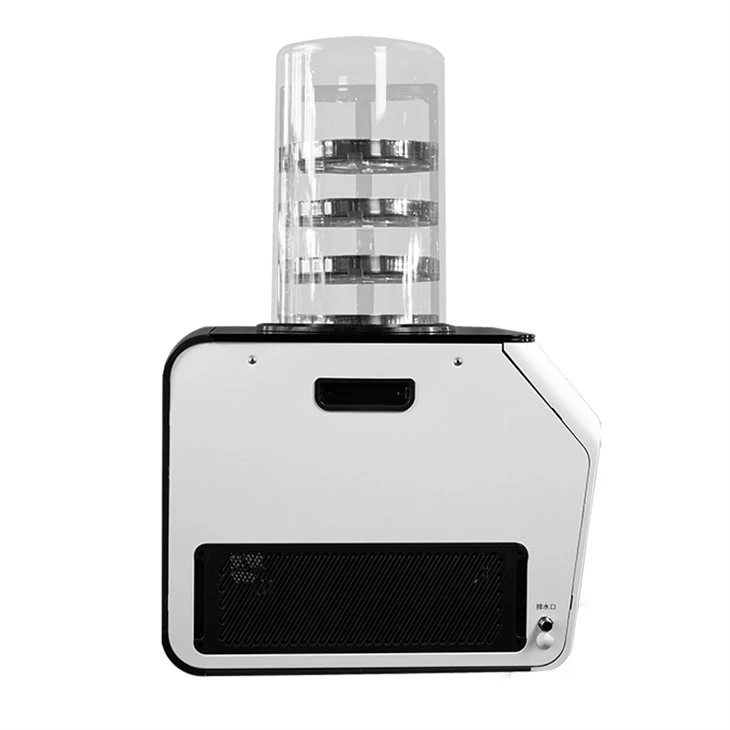
Optimizing the drying process of an Experimental Freeze Dryer Machine is crucial for achieving high-quality results in various scientific and industrial applications. As a supplier of these advanced machines, I have witnessed firsthand the impact of an optimized drying process on the final product's quality, stability, and shelf life. In this blog post, I will share some valuable insights and practical tips on how to optimize the drying process of an Experimental Freeze Dryer Machine.
Understanding the Freeze Drying Process
Before delving into the optimization strategies, it is essential to have a clear understanding of the freeze drying process. Freeze drying, also known as lyophilization, is a dehydration technique that involves freezing the product, reducing the pressure, and then removing the ice by sublimation. This process preserves the product's structure, biological activity, and chemical composition, making it ideal for sensitive materials such as pharmaceuticals, biologics, food products, and research samples.
The freeze drying process consists of three main stages: freezing, primary drying (sublimation), and secondary drying (desorption). Each stage plays a critical role in the overall efficiency and effectiveness of the process.

- Freezing: The product is frozen to a temperature below its eutectic point, which is the lowest temperature at which the product can exist in a solid-liquid equilibrium. This step is crucial for preventing the formation of large ice crystals, which can damage the product's structure and reduce its quality.
- Primary Drying (Sublimation): Once the product is frozen, the pressure is reduced, and heat is applied to initiate the sublimation process. During sublimation, the ice directly changes from a solid to a vapor state without passing through the liquid phase. This stage removes the majority of the water from the product.
- Secondary Drying (Desorption): After the primary drying stage, a small amount of bound water remains in the product. The secondary drying stage involves raising the temperature and reducing the pressure further to remove this bound water. This step helps to improve the product's stability and shelf life.
Factors Affecting the Freeze Drying Process
Several factors can influence the efficiency and effectiveness of the freeze drying process. Understanding these factors is essential for optimizing the process and achieving the desired results. Some of the key factors include:
- Product Characteristics: The physical and chemical properties of the product, such as its composition, concentration, viscosity, and particle size, can significantly affect the freeze drying process. For example, products with high water content or complex compositions may require longer drying times and more precise control of the process parameters.
- Freezing Rate: The rate at which the product is frozen can have a significant impact on the quality of the final product. A slow freezing rate can result in the formation of large ice crystals, which can damage the product's structure and reduce its quality. On the other hand, a fast freezing rate can lead to the formation of small ice crystals, which can improve the product's quality and reduce the drying time.
- Pressure and Temperature: The pressure and temperature conditions during the primary and secondary drying stages are critical for achieving efficient sublimation and desorption. Maintaining the appropriate pressure and temperature levels can help to optimize the drying process and prevent the formation of defects in the final product.
- Heat Transfer: Efficient heat transfer is essential for ensuring uniform drying and preventing the formation of hot spots or cold spots in the product. The design of the freeze dryer, including the type of heating system and the placement of the product trays, can significantly affect the heat transfer efficiency.
- Vacuum System: A reliable and efficient vacuum system is crucial for maintaining the low pressure required for the sublimation process. The vacuum system should be able to achieve and maintain the desired pressure levels throughout the drying process.
Optimization Strategies
Based on the factors mentioned above, here are some practical strategies for optimizing the drying process of an Experimental Freeze Dryer Machine:
1. Pre-Treatment of the Product
- Concentration Adjustment: If the product has a high water content, consider concentrating it before the freeze drying process. This can help to reduce the drying time and improve the efficiency of the process.
- Particle Size Reduction: For products with large particles, consider reducing the particle size before freezing. This can increase the surface area of the product and improve the heat transfer efficiency during the drying process.
- Addition of Cryoprotectants: In some cases, adding cryoprotectants to the product can help to prevent the formation of ice crystals and protect the product's structure during the freezing process.
2. Optimize the Freezing Process
- Fast Freezing: Use a fast freezing method, such as immersion in liquid nitrogen or rapid cooling in a freezer, to achieve a fast freezing rate. This can help to form small ice crystals and improve the quality of the final product.
- Controlled Freezing: For products that are sensitive to freezing, consider using a controlled freezing process to ensure a uniform freezing rate and prevent the formation of large ice crystals.
- Pre-Freezing in the Freeze Dryer: Some freeze dryers allow for pre-freezing the product directly in the chamber. This can help to minimize the handling of the frozen product and reduce the risk of ice crystal growth.
3. Optimize the Primary Drying Stage
- Optimal Pressure and Temperature: Determine the optimal pressure and temperature conditions for the primary drying stage based on the product's characteristics. Maintaining the appropriate pressure and temperature levels can help to achieve efficient sublimation and prevent the formation of defects in the final product.
- Gradual Pressure Reduction: Instead of reducing the pressure suddenly, consider using a gradual pressure reduction method to prevent the formation of cracks or collapse in the product.
- Monitoring and Control: Continuously monitor the pressure, temperature, and other process parameters during the primary drying stage to ensure that the process is running smoothly and to make any necessary adjustments.
4. Optimize the Secondary Drying Stage
- Higher Temperature and Lower Pressure: Increase the temperature and reduce the pressure further during the secondary drying stage to remove the bound water from the product. However, be careful not to exceed the product's maximum temperature limit to prevent degradation.
- Longer Drying Time: Depending on the product's characteristics, the secondary drying stage may require a longer drying time compared to the primary drying stage. Ensure that the product is dried thoroughly to achieve the desired moisture content.
5. Maintenance and Calibration of the Freeze Dryer
- Regular Maintenance: Perform regular maintenance on the freeze dryer, including cleaning the chamber, checking the vacuum system, and replacing any worn-out parts. This can help to ensure the proper functioning of the machine and prevent any issues that may affect the drying process.
- Calibration: Calibrate the freeze dryer regularly to ensure that the temperature, pressure, and other process parameters are accurate. This can help to improve the reproducibility of the drying process and ensure consistent results.
Choosing the Right Freeze Dryer
In addition to optimizing the drying process, choosing the right Experimental Freeze Dryer Machine is also crucial for achieving the desired results. Here are some factors to consider when selecting a freeze dryer:
- Capacity: Determine the required capacity of the freeze dryer based on the volume of the product to be dried. Consider both the current and future needs of your application.
- Type of Freeze Dryer: There are different types of freeze dryers available, including Standard Bell-Type Freeze Dryer and Small Scale Freeze Dryer. Choose the type that best suits your application and budget.
- Features and Functionality: Look for a freeze dryer that offers the features and functionality you need, such as temperature and pressure control, automatic operation, and data logging.
- Quality and Reliability: Choose a freeze dryer from a reputable manufacturer that has a proven track record of producing high-quality and reliable machines.
Conclusion
Optimizing the drying process of an Experimental Freeze Dryer Machine is essential for achieving high-quality results in various scientific and industrial applications. By understanding the freeze drying process, considering the factors that affect the process, and implementing the optimization strategies mentioned above, you can improve the efficiency and effectiveness of the drying process and produce high-quality freeze-dried products.
If you are interested in learning more about our Experimental Freeze Dryer Machine or have any questions about the freeze drying process, please feel free to contact us. Our team of experts is always ready to assist you and provide you with the best solutions for your needs.
References
- [1] Wang, Y. J., & Pikal, M. J. (2004). Design and optimization of freeze-drying processes: practical advice. Journal of pharmaceutical sciences, 93(6), 1390-1402.
- [2] Tang, X., & Pikal, M. J. (2004). Design of freeze-drying processes for pharmaceuticals: practical advice. Pharmaceutical research, 21(2), 191-200.
- [3] Franks, F. (1990). Freezing of living cells: mechanisms and implications. Biochimica et Biophysica Acta (BBA)-General Subjects, 1000(1), 139-148.


