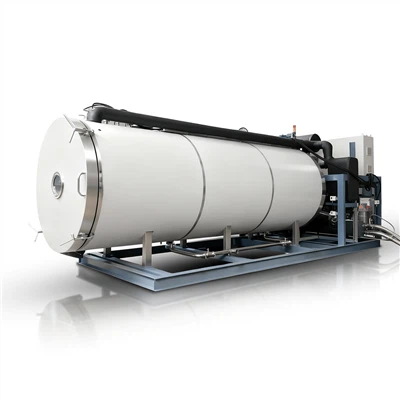
As a supplier of experimental freeze dryer machines, I often encounter inquiries from researchers and scientists about the suitability of our equipment for biological sample preservation. This blog post aims to explore the feasibility of using an experimental freeze dryer machine for this purpose, delving into the principles, advantages, limitations, and practical considerations involved.
Understanding Freeze Drying
Freeze drying, also known as lyophilization, is a process that removes water from a frozen product by sublimation. Sublimation is the direct transition of a substance from the solid phase (ice) to the gaseous phase (vapor) without passing through the liquid phase. This process is achieved by lowering the pressure in a chamber containing the frozen sample and applying heat to provide the energy required for sublimation.


The freeze-drying process typically consists of three main stages: freezing, primary drying, and secondary drying. During the freezing stage, the sample is rapidly cooled to a temperature below its eutectic point, the lowest temperature at which the sample remains in a liquid state. This ensures that the water in the sample is converted into ice, which can then be removed by sublimation.
In the primary drying stage, the pressure in the chamber is reduced to a level below the vapor pressure of ice, allowing the ice to sublimate directly into vapor. Heat is applied to the sample to provide the energy required for sublimation, but the temperature is carefully controlled to prevent the sample from melting. This stage can take several hours to several days, depending on the size and composition of the sample.
The secondary drying stage is used to remove any remaining bound water from the sample. This is achieved by increasing the temperature and reducing the pressure further, allowing the bound water to desorb from the sample and be removed by the vacuum system. The secondary drying stage typically takes several hours to complete.
Advantages of Freeze Drying for Biological Sample Preservation
Freeze drying offers several advantages for biological sample preservation, making it a popular choice among researchers and scientists. Some of the key advantages include:
- Preservation of biological activity: Freeze drying helps to preserve the biological activity of samples by minimizing the damage caused by freezing and dehydration. The low temperatures and reduced pressure used in the process help to prevent the formation of ice crystals, which can damage cell membranes and denature proteins. Additionally, the removal of water from the sample helps to inhibit the growth of microorganisms and enzymes, which can cause degradation of the sample over time.
- Long-term storage: Freeze-dried samples can be stored for extended periods of time without significant loss of biological activity. The removal of water from the sample reduces the risk of microbial growth and chemical reactions, which can cause degradation of the sample over time. Additionally, freeze-dried samples can be stored at room temperature or in a freezer, depending on the specific requirements of the sample.
- Ease of handling and transportation: Freeze-dried samples are lightweight and easy to handle, making them ideal for transportation and storage. The removal of water from the sample reduces the volume and weight of the sample, making it easier to ship and store. Additionally, freeze-dried samples can be rehydrated quickly and easily by adding water, allowing for immediate use.
- Compatibility with a wide range of samples: Freeze drying can be used to preserve a wide range of biological samples, including proteins, enzymes, vaccines, cells, tissues, and microorganisms. The process is gentle and can be tailored to the specific requirements of the sample, ensuring that the biological activity of the sample is preserved.
Limitations of Freeze Drying for Biological Sample Preservation
While freeze drying offers several advantages for biological sample preservation, it also has some limitations that need to be considered. Some of the key limitations include:
- High cost: Freeze drying equipment can be expensive to purchase and operate, making it a significant investment for many laboratories. Additionally, the process can be time-consuming and requires specialized training and expertise to ensure that the samples are processed correctly.
- Potential for sample damage: Although freeze drying is a gentle process, it can still cause some damage to the sample if not performed correctly. The formation of ice crystals during the freezing stage can damage cell membranes and denature proteins, while the application of heat during the primary and secondary drying stages can cause further damage to the sample. Additionally, the removal of water from the sample can cause changes in the structure and function of the sample, which can affect its biological activity.
- Limited sample size: Freeze drying equipment typically has a limited capacity, which can make it difficult to process large samples. Additionally, the process can be time-consuming, especially for large samples, which can limit the throughput of the equipment.
- Need for specialized storage conditions: Freeze-dried samples need to be stored in a dry, cool, and dark environment to prevent degradation. Additionally, the samples need to be protected from moisture, oxygen, and light, which can cause chemical reactions and degradation of the sample over time.
Practical Considerations for Using an Experimental Freeze Dryer Machine for Biological Sample Preservation
When using an experimental freeze dryer machine for biological sample preservation, there are several practical considerations that need to be taken into account to ensure that the samples are processed correctly and the biological activity of the samples is preserved. Some of the key considerations include:
- Sample preparation: The samples need to be prepared carefully before freeze drying to ensure that they are in a suitable condition for processing. This may involve removing any excess water or contaminants from the sample, as well as adjusting the pH and buffer composition of the sample to ensure that it is compatible with the freeze-drying process.
- Freezing rate: The freezing rate can have a significant impact on the quality of the freeze-dried sample. A slow freezing rate can cause the formation of large ice crystals, which can damage cell membranes and denature proteins. A fast freezing rate, on the other hand, can help to prevent the formation of ice crystals and preserve the biological activity of the sample. The freezing rate can be controlled by adjusting the temperature of the freezer or by using a controlled-rate freezer.
- Primary drying conditions: The primary drying conditions, including the temperature, pressure, and duration of the process, need to be carefully controlled to ensure that the ice in the sample is removed by sublimation without causing damage to the sample. The temperature should be kept below the glass transition temperature of the sample to prevent the sample from melting, while the pressure should be kept below the vapor pressure of ice to ensure that the ice sublimates directly into vapor.
- Secondary drying conditions: The secondary drying conditions, including the temperature, pressure, and duration of the process, need to be carefully controlled to ensure that any remaining bound water is removed from the sample without causing damage to the sample. The temperature should be increased gradually to prevent the sample from melting, while the pressure should be reduced further to ensure that the bound water desorbs from the sample and is removed by the vacuum system.
- Rehydration: The freeze-dried samples need to be rehydrated carefully to ensure that the biological activity of the samples is preserved. The rehydration process should be performed slowly and gently, using a suitable buffer or solution. The rehydrated samples should be used immediately or stored at a suitable temperature to prevent degradation.
Our Experimental Freeze Dryer Machines
As a supplier of experimental freeze dryer machines, we offer a range of high-quality products that are designed to meet the needs of researchers and scientists in the biological and pharmaceutical industries. Our freeze dryer machines are available in a variety of sizes and configurations, including Standard Bell-Type Freeze Dryer, Stoppering Bell-Type Freeze Dryer, and Small Scale Freeze Dryer.
Our freeze dryer machines are equipped with advanced features and technologies, including programmable controllers, vacuum pumps, and refrigeration systems, to ensure that the samples are processed correctly and the biological activity of the samples is preserved. Additionally, our freeze dryer machines are easy to operate and maintain, making them a popular choice among researchers and scientists.
Conclusion
In conclusion, an experimental freeze dryer machine can be used for biological sample preservation, offering several advantages over other methods of preservation. However, it is important to consider the limitations and practical considerations of the process to ensure that the samples are processed correctly and the biological activity of the samples is preserved. As a supplier of experimental freeze dryer machines, we are committed to providing high-quality products and services to our customers, and we are happy to help you choose the right freeze dryer machine for your specific needs. If you are interested in learning more about our products or have any questions, please contact us to discuss your requirements and explore the possibilities of using our freeze dryer machines for your biological sample preservation needs.
References
- Avis, K. E., & Nail, S. L. (2009). Lyophilization and development of solid protein pharmaceuticals. In Protein formulation and delivery (pp. 229-254). CRC Press.
- Franks, F. (1990). Freezing of living cells: mechanisms and implications. Biochimica et Biophysica Acta (BBA)-General Subjects, 1000(1), 131-142.
- Pikal, M. J., & Shah, S. (1990). The glass transition in pharmaceuticals and biologicals. In Lyophilization of biopharmaceuticals (pp. 13-30). Springer.
- Wang, W. (2000). Instability, stabilization, and formulation of liquid protein pharmaceuticals. International Journal of Pharmaceutics, 203(1-2), 1-60.