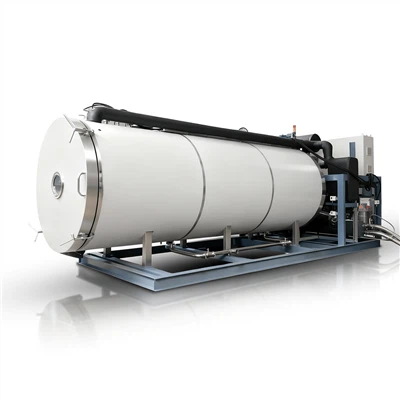
Hey there! As a supplier of Stoppering Bell - Type Freeze Dryers, I often get asked if our machines can be used for drying nucleic acids. Well, let's dive right into this topic and break it down.
First off, what are nucleic acids? Nucleic acids, like DNA and RNA, are super important molecules in biology. They carry genetic information and play a crucial role in all living organisms. When it comes to handling nucleic acids, we need to be extra careful because they can be pretty delicate.
Now, let's talk about our Stoppering Bell - Type Freeze Dryers. These machines are designed to remove water from substances through a process called lyophilization. In simple terms, it freezes the material first and then removes the ice by sublimation, turning it directly from a solid to a gas without going through the liquid phase.
One of the big advantages of using a Stoppering Bell - Type Freeze Dryer for nucleic acids is the gentle drying process. Since sublimation happens at low temperatures, it helps to preserve the integrity of the nucleic acids. High temperatures can cause damage to the structure of DNA and RNA, like breaking the strands or causing chemical modifications. With our freeze dryers, we can avoid these issues and keep the nucleic acids in good shape.
Another benefit is the ability to control the drying conditions. Our Stoppering Bell - Type Freeze Dryers allow us to adjust parameters such as temperature, pressure, and drying time. This means we can customize the drying process to suit the specific needs of the nucleic acids. For example, different types of nucleic acids might require different drying rates or final moisture levels.


But it's not all smooth sailing. There are some challenges when using a freeze dryer for nucleic acids. One issue is the potential for contamination. Nucleic acids are very sensitive to contaminants, like bacteria, viruses, or other nucleic acid fragments. So, we need to make sure the freeze dryer is properly cleaned and maintained to prevent any contamination during the drying process.
Also, the sample preparation is crucial. Before putting the nucleic acids into the freeze dryer, we need to make sure they are in the right form. For example, they might need to be in a suitable buffer solution that can protect them during the freezing and drying steps.
Now, let's take a look at some of the specific models we offer. We have the Lab-scale Freeze Dryer, which is great for small - scale experiments. It's compact and easy to operate, making it a popular choice for research labs.
If you need to dry multiple samples at once, our Stoppering Multi - Manifold Bell - Type Freeze Dryer is a great option. It has multiple ports where you can attach different sample vials, allowing for efficient drying of several samples simultaneously.
For those on a budget or with limited space, our Small Scale Freeze Dryer is a cost - effective solution. It still offers high - quality drying performance but in a more compact package.
In terms of the actual drying process for nucleic acids, here's a general step - by - step guide. First, we need to prepare the nucleic acid samples. This might involve purifying them, diluting them in a suitable buffer, and then aliquoting them into vials. Next, we place the vials in the freeze dryer and set the appropriate drying parameters. The machine will first freeze the samples, usually at a very low temperature like - 40°C or - 80°C. After that, the sublimation process starts, and the ice is slowly removed under reduced pressure. Finally, we can stopper the vials while they are still in the freeze dryer to seal in the dried nucleic acids.
To ensure the best results, it's also a good idea to do some pre - testing. We can run small - scale trials with a small amount of nucleic acids to optimize the drying parameters. This way, we can make sure we are getting the best possible quality of the dried nucleic acids.
Overall, a Stoppering Bell - Type Freeze Dryer can definitely be used for drying nucleic acids. It offers a gentle and controllable drying process that helps to preserve the integrity of these important molecules. However, we need to be aware of the challenges and take the necessary precautions to ensure a successful drying process.
If you're interested in learning more about our Stoppering Bell - Type Freeze Dryers or if you have any questions about using them for drying nucleic acids, don't hesitate to reach out. We're here to help you find the right solution for your needs. Whether you're a research lab, a biotech company, or an academic institution, we can provide you with the support and expertise you need.
So, if you're thinking about purchasing a freeze dryer for your nucleic acid drying needs, let's start a conversation. We can discuss your specific requirements, provide you with detailed product information, and even arrange for a demonstration if you'd like. Contact us today and let's work together to achieve the best results for your nucleic acid drying projects.
References
- "Principles of Freeze - Drying" by John W. King
- "Nucleic Acid Chemistry: Improved and New Synthetic Procedures, Methods, and Techniques" edited by Leroy B. Townsend and R. Stuart Tipson